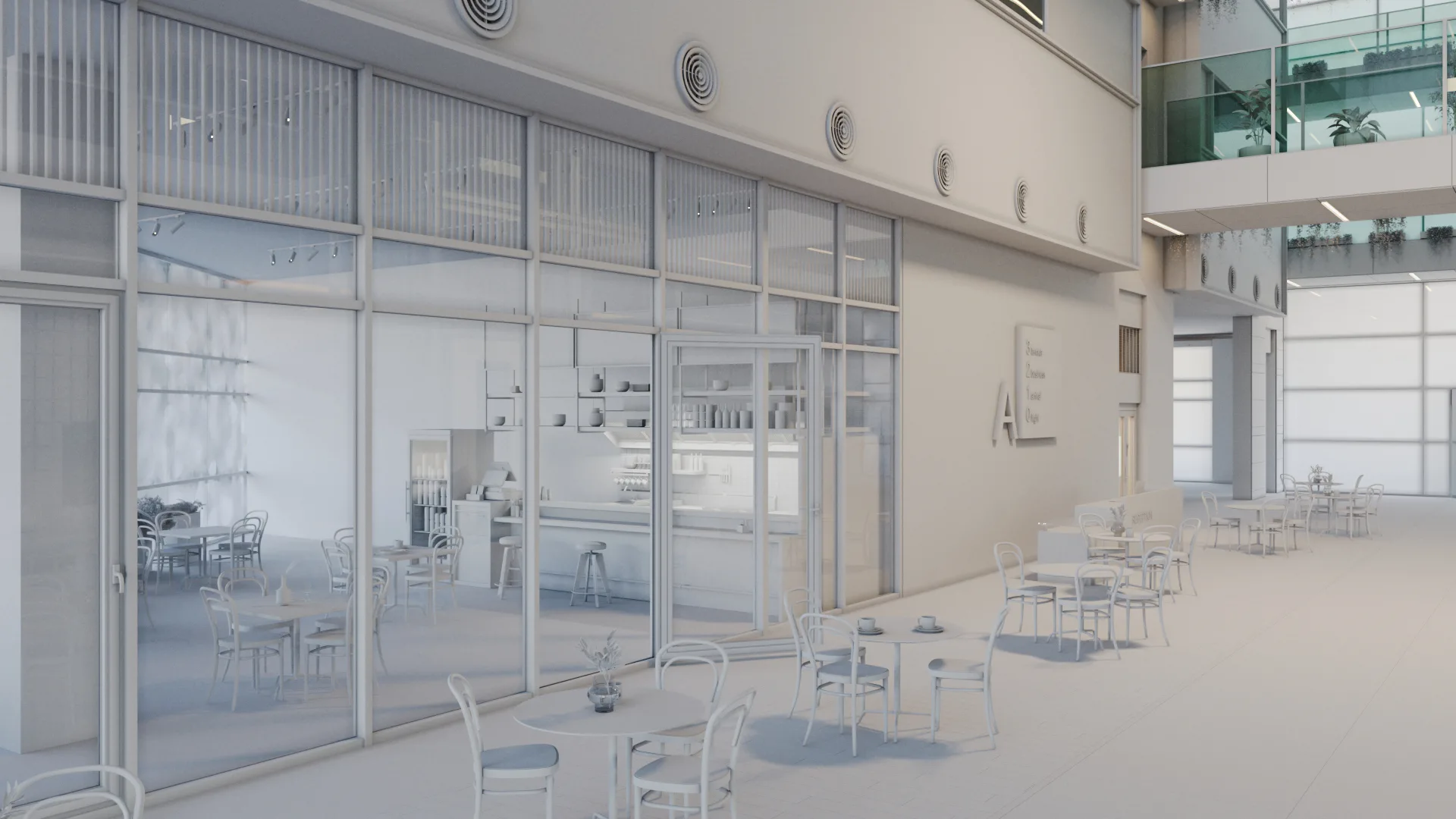
You've spent weeks on a design. You've refined the layout, selected finishes that will look extraordinary in person, and thought through every detail of the spatial sequence. Then you walk into a client presentation, open your floor plans and section drawings, and watch the energy drain from the room. The client nods politely. They say they'll think about it. Three weeks later they hire someone else — someone who showed them a render.
This scenario is more common than architects like to admit. The problem isn't the design. It's the translation gap between what you see as a trained architect and what a client can interpret from 2D drawings. Interior 3D rendering closes that gap — and in my experience, it does more than that. Used well, it accelerates approvals, reduces revision cycles by up to 50%, and directly supports higher fees. Here's how to use it as a business tool, not just a visual add-on.
Why 2D Drawings Fail Non-Technical Clients
Floor plans, sections, and elevations are the native language of architecture. They're precise, information-dense, and completely opaque to most clients. When someone without architectural training looks at a floor plan, they see rectangles and lines. They don't see the sweep of light across a vaulted ceiling, the visual weight of a stone fireplace, or how a furniture arrangement will feel at human scale.
The cognitive leap required to translate a 2D drawing into a three-dimensional lived experience is significant — most people simply can't make it reliably. And asking clients to make that leap before committing to a major financial decision adds friction that costs you proposals.
I've seen technically excellent designs lose to weaker competitors for one reason: the competitor showed the client what their future space would actually look like. A photorealistic interior render removes the imagination burden entirely. Clients don't need to visualize the space. They can see it — the way afternoon light falls across a hardwood floor, the relationship between ceiling height and the furniture below, how finishes read together in context.
The Business Case: Faster Approvals, Fewer Revisions
The most tangible ROI from professional interior rendering isn't aesthetic — it's operational. Projects using interior visualization at the right stages see approval cycles cut by 20–30% and revision rounds reduced by up to half.
The mechanism is straightforward. When clients can see a space before it's built, they give specific, actionable feedback instead of vague uncertainty. "Can we move the island six inches south?" is an easy change. "I'm not sure about the whole kitchen" — driven by an inability to visualize the design — is a problem that arrives after you've invested hundreds of hours in design development.
Firms that introduce rendering during schematic design — not as a final presentation tool but as an active design communication tool — report shorter overall project timelines precisely because the major spatial decisions get genuine client buy-in earlier. Revisions at the schematic stage cost a fraction of what the same change costs in design development or, worse, during construction.
There's also a subtler effect: clients who can see their project feel more in control. They stop second-guessing decisions they've already made visually. That psychological security reduces the drip of small revision requests that accumulate throughout a long project.
What a Professional Interior Render Actually Communicates
A well-executed interior render communicates things no drawing can:
- Material quality and surface finish — the visual difference between polished marble and honed marble is invisible on a spec sheet. In a render, it's immediate. Clients can evaluate whether the proposed finishes feel right before any materials are ordered.
- Lighting behavior — how natural light enters and moves through a space at different times of day, how artificial layers of lighting interact, where shadows and highlights fall. Lighting has more impact on how a room feels than almost any material decision.
- Spatial proportion and scale — ceiling height relative to floor area, the visual weight of structural elements, whether a furniture arrangement actually feels comfortable in the proposed floor plan. These are the questions clients most need answered before approving a layout.
- Finish coordination — whether warm undertones in white oak flooring clash with the cool grey in the specified stone countertop. These conflicts are invisible until they're built. A render catches them in two minutes instead of after installation.
- Atmosphere and emotional character — the difference between a space that feels intimate versus one that feels grand often isn't a matter of square footage. It's lighting angles, ceiling height, material warmth, and the density of the furniture arrangement. Renders make atmospheric intent legible before construction.
When to Introduce Rendering in the Project Timeline
Most practices introduce rendering too late — as a final sign-off tool after design decisions are already locked. That misses most of the value.
The highest-ROI moment for interior rendering is during schematic design, when the major spatial decisions are being explored but nothing is final. A render at this stage does several things at once: it validates your design direction with the client before you've committed to design development, it surfaces spatial or atmospheric concerns early enough to address them cheaply, and it gives the client a visual reference point for all subsequent decisions.
The second strategic moment is finishes selection. Presenting a material palette in context — shown in the actual space under the specified lighting conditions, not on a sample board — dramatically compresses the approval cycle for FF&E decisions. When clients can see that the warm oak, the Calacatta counter, and the matte bronze hardware work together as a system, they commit. When they're evaluating samples in isolation, they hesitate indefinitely. For projects with sustainability goals — green interiors, biophilic design, or daylighting optimization — sustainable architecture visualization can accurately represent high-performance materials and natural light strategies in the same photorealistic format.
A third moment that many architects underuse: pre-construction sign-off. A final render set before construction begins gives clients one last opportunity to confirm they're satisfied with the design — and gives you documented evidence that they approved it. This protects against late-stage "I thought it would look different" conversations.
Renders as a Competitive Differentiator and Fee Justifier
When a client is evaluating three proposals and one includes photorealistic visualizations of the proposed design, that proposal looks like more value — even if the scope of work is identical. Rendering signals investment in the client's experience. It signals confidence in the design. It signals a practice that communicates clearly rather than expecting clients to trust abstract drawings.
For residential work especially, where clients are often making the largest financial commitment of their lives, this matters enormously. The proposal that shows a client their future kitchen, their future master suite, their future living room — with their specified materials and their particular lighting conditions — is the proposal that wins. The render transforms an abstract document into a concrete vision.
There's also a direct fee justification argument. Practices that include rendering in their project scope can present it as a client service — "we show you exactly what you're approving before it's built" — rather than as a cost item. When framed that way, clients often view the additional scope favorably, and it becomes a reason to choose your firm over a lower-cost competitor who presents drawings only.
Choosing the Right Views for Maximum Impact
Not every room in a project needs a render, and not every angle tells the right story. For residential projects, three to five well-chosen interior views typically cover the key decision points:
- The primary living space from the entry point — the first-impression view that establishes the spatial sequence and atmosphere of the main floor
- The kitchen or the room with the most complex finish coordination — this is where material conflicts are most likely and where client approval matters most
- The signature architectural feature — fireplace wall, primary stair, double-height ceiling, custom millwork element — the view that makes the project architecturally distinctive
- The master suite or primary bedroom — where atmosphere matters as much as layout, and where clients most need to feel the space emotionally
- An outdoor transition if relevant — living rooms that open to terraces, kitchens connected to outdoor dining — the relationship between interior and exterior affects how both read
For commercial projects — offices, hospitality, retail environments — the selection logic shifts toward views that communicate the user experience and validate the project brief. A hotel lobby render should feel like the guest's first impression. A restaurant render should communicate the dining atmosphere that will drive reservations. A corporate office render should show how the spatial design supports the stated work culture. For commercial retail interior projects specifically, retail store rendering has distinct brief requirements around brand identity, merchandise display zones, and customer flow that differ from other commercial interior types.
What to Give Your Rendering Studio for Best Results
The quality of interior renders depends heavily on the quality of the brief. The more complete your input, the fewer revision rounds you'll need — and the more accurately the render will reflect your design intent rather than the studio's defaults.
At minimum, provide:
- Accurate geometry files — CAD (.dwg/.dxf) or Revit (.rvt) with correct dimensions, all walls, doors, windows, and fixed elements. The studio's ability to render accurately is only as good as the geometry you provide.
- Camera positions and angles — specific views you need. Annotating your floor plan with approximate camera locations and directions is faster than describing them in text.
- Material and finish specifications — manufacturer and product name for every visible surface in the target views. "Warm grey stone" is a direction; "Porcelanosa Marmol Carrara, honed, 45×120" is a specification the studio can match.
- Lighting intent — time of day, artificial lighting layers, mood reference. Include reference images showing the lighting quality you're after.
- Furniture and decor direction — either specific FF&E pieces or a style direction ("contemporary with mid-century influence, warm tones, minimal clutter"). The furniture arrangement affects spatial readings significantly.
- Atmosphere notes — one or two sentences on the emotional quality the space should convey. "Warm, residential, not corporate" tells the studio how to set the scene beyond the technical specs.
For a complete briefing checklist that covers all render types, see our guide on how to brief a 3D rendering studio.
The ROI Calculation Architects Actually Need
The hesitation I hear most often from architects considering interior rendering is cost. That's the wrong frame. The right question is: what does a render pay back relative to what it costs?
A single late-stage design revision — after construction documents are complete — typically costs the project several weeks and significant professional fee exposure. A render that prevents one such revision pays for itself many times over. A proposal that closes because you showed photorealistic visualizations pays for itself in project revenue. A finishes approval that takes one session instead of three months of sample boards pays for itself in hours saved and client relationship quality.
The practices that use rendering most effectively don't treat it as an optional upgrade. They price it into their project scope at the appropriate stages, frame it as a client service, and use it as a decision-making tool throughout the project rather than a presentation set piece at the end. That approach changes the economics entirely: rendering becomes a cost of doing efficient business rather than a discretionary expense.
To see the quality of output you can expect from a professional studio, browse our interior rendering portfolio — it covers residential, hospitality, commercial, and mixed-use projects at various scales. For specific pricing and what's included, see our rendering pricing page or request a free project estimate. We respond within 2 hours.
Ready to See Your Design Before It's Built?
Send us your project files and we'll have a free estimate and recommended view list back to you within 2 hours.
Request a Free Estimate