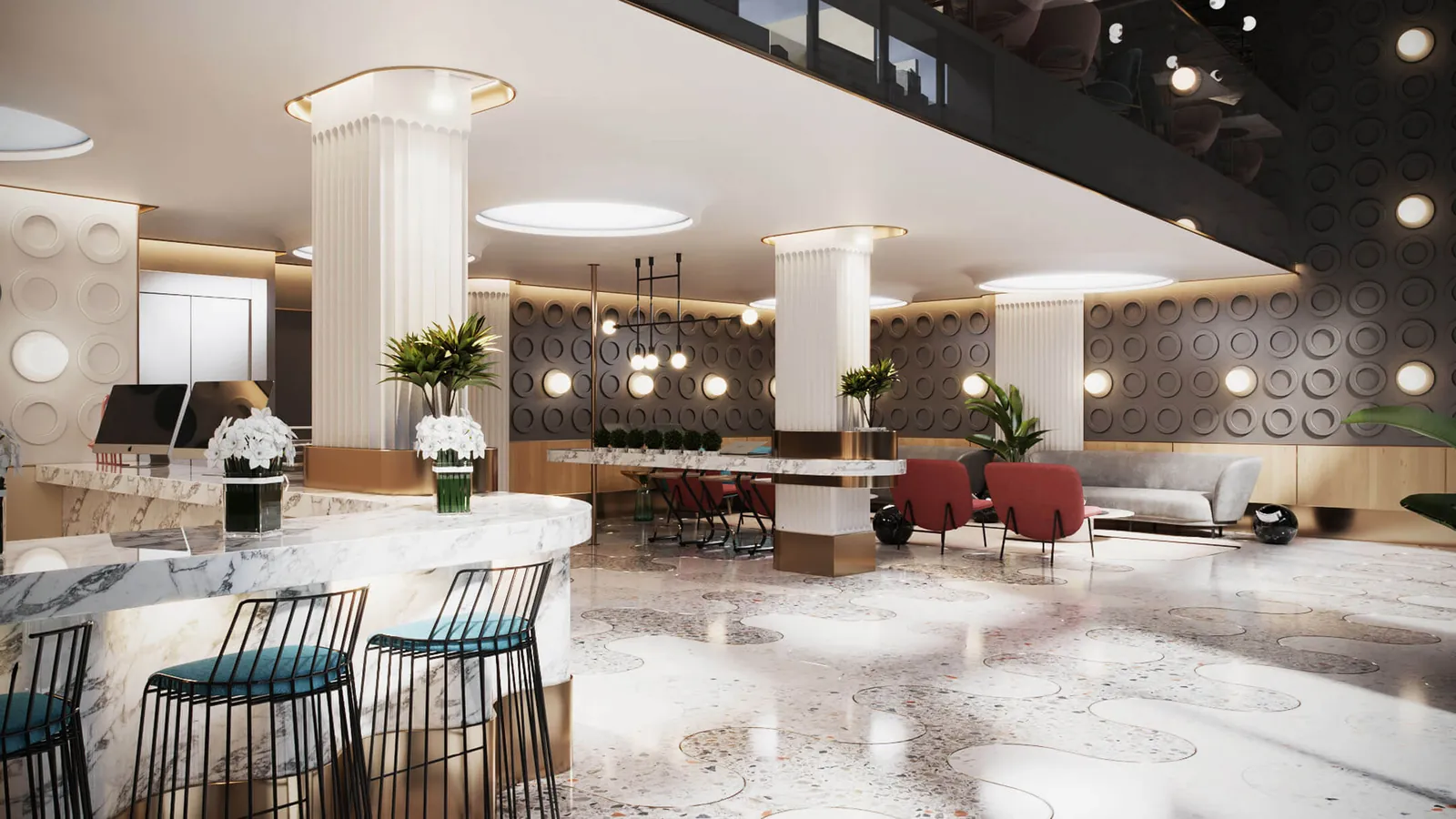
Interior rendering and exterior rendering aren't competing approaches — they answer different questions for different audiences at different stages of a project. The choice between them isn't a matter of preference; it's a matter of matching the right visualization tool to the specific communication need.
Both are valuable. Both are investments. The mistake is defaulting to one type based on habit rather than asking which one serves the actual decision that needs to be made. This guide walks through the core differences in purpose, audience, and typical project stage — so you can make the right choice for each situation rather than using one type everywhere and underusing the other.
What Each Type Actually Communicates
The distinction starts with what each visualization type is designed to show.
An interior render shows the experience of being inside a space. Its subjects are spatial scale at human eye level, the behavior of light within the space, how materials and finishes read together in context, and how furniture and objects create atmosphere. It answers the question: "What will it feel like to be in this room?"
An exterior render shows the appearance and presence of a building in its context. Its subjects are architectural form, massing, the relationship between the building and its surroundings, how the facade reads at different distances, and how the building contributes to or changes its streetscape or site. It answers the question: "What will this building look like from the outside?"
Both questions are valid. Which is more urgent depends on who is asking and what decision they need to make.
When Interior Rendering Delivers the Most Value
Interior rendering delivers its highest value when the primary decision is about the experience of inhabiting a space — not its external appearance. This applies to a surprisingly wide range of situations:
Residential Client Presentations
Homeowners and residential buyers are deciding whether they want to live somewhere. That decision is fundamentally about the interior experience — the warmth of the kitchen in morning light, the ceiling height relative to the living room furniture, the quality of the master suite at the right atmospheric conditions. Exterior renders are useful for establishing the building's identity; interior renders are what close the emotional decision for a residential buyer.
Hospitality and Restaurant Design
Hotel lobbies, restaurant dining rooms, spa environments, boutique hotel suites — these spaces are evaluated almost entirely on interior atmosphere. A guest choosing a hotel, a couple booking a restaurant, an operator approving a hospitality fit-out — all of these decisions are driven by the interior experience the render communicates. Exterior renders matter for street presence and brand identity; but if the interior doesn't communicate the right experience, the exterior impression won't close the deal.
Interior Design and Fit-Out Proposals
When the project is specifically about the interior environment — a corporate office fit-out, a retail store design, a residential renovation — interior rendering is the natural primary deliverable. The exterior is largely fixed; what needs to be sold, approved, and specified is the interior design.
Material and Finish Selection
Showing clients how proposed materials look in the actual space — not on a sample board isolated from context — dramatically reduces approval cycles. A white oak floor that looks beautiful in a sample can look cold or orange depending on the other materials and the light. An interior render shows those interactions before materials are ordered and installed.
When Exterior Rendering Delivers the Most Value
Exterior rendering is the primary tool when the audience needs to evaluate the building as an object in its context — not as an experience to inhabit. This covers several distinct situations:
Planning and Permitting Submissions
Regulatory bodies, design review boards, and community stakeholders evaluate a project's impact on the street, neighborhood, and surrounding built environment. This is an exterior question. Interior renders don't help a planning board evaluate how a building will read from a public street at an agreed viewpoint corridor — exterior renders do. Planning submissions are one of the clearest use cases for exterior rendering, and they often have specific technical requirements (viewpoints, context accuracy, before/after comparisons) that an experienced rendering studio can meet.
Developer Marketing for Residential and Commercial Buildings
The building's visual identity — what the address looks like, how the facade reads, how the building positions itself in the market — is established by exterior renders. For high-rise residential, the exterior render is the hero marketing image: it establishes address value and signals the quality of the product before buyers ever see an interior. For commercial leasing, the building's street presence and architectural credibility are evaluated from exterior renders.
Investor Presentations
Investors evaluating a development need to understand the project's position in its market and its visual credibility as an investment. Exterior renders — particularly aerial views that show the building's scale and relationship to surrounding development — communicate project ambition and market positioning more effectively than interior renders for this audience.
Architectural Portfolio and Press
Architecture is primarily experienced from outside. The primary images that represent a building in publication, competition entries, and architectural portfolios are exterior views. Interior renders complement the record of a project, but exterior renders typically lead.
The Role of Project Stage
Project stage influences the choice as much as audience does. A useful framework by stage:
- Early schematic design — exterior renders test the architectural concept, massing, and relationship to context. These are the big-picture questions that need answering before detailed interior work begins. Interior rendering at this stage is premature if spatial decisions and material specifications aren't yet settled.
- Design development — interior rendering becomes increasingly valuable as the interior environment takes shape. Material coordination, spatial sequence, lighting design, and furniture arrangement can all be explored and communicated through interior views. Exterior rendering continues for planning submissions and investor updates.
- Pre-construction — full marketing packages typically need both types simultaneously. The exterior render drives the building's visual identity and pre-sales campaign; interior renders of key spaces close the emotional decision for buyers.
- Renovation or repositioning — if the exterior is largely unchanged, interior rendering may be the primary focus. If the facade or entry sequence is being significantly altered, exterior rendering is essential to communicate the transformation.
Technical Requirements: What Each Type Needs From You
Interior and exterior renders have different technical requirements in terms of what information the studio needs from you.
For interior rendering, the critical inputs are: accurate geometry with correct dimensions; material and finish specifications with product references for every visible surface; furniture and fixture layout (or freedom to propose one that fits the design intent); camera positions and heights; and time of day with lighting intent for each view. The level of material specification required is higher than for exterior work — interior renders are largely about material quality, so incomplete specifications produce generic-looking results.
For exterior rendering, the critical inputs are: the building's complete geometry and facade treatment; facade material and cladding specifications; site context (adjacent buildings, street widths, landscape plan); and the viewing angles that serve the specific audience and purpose. Exterior renders can show through windows to an interior, but that interior doesn't need to be fully specified unless it's a significant part of the image.
When to Commission Both
Many projects genuinely need both — and the combination tells a more complete story than either alone.
For residential development: exterior renders establish the building's identity and address value; interior renders of the best-appointed units show the product quality that justifies the price point. Together, they cover the full buyer decision journey — from "do I want to live in this building?" to "can I imagine myself in one of these units?"
For hospitality projects: exterior renders establish the hotel or restaurant in its urban context; interior renders communicate the guest experience that makes the brand competitive. Both matter because different stakeholders evaluate the project on different criteria.
For large commercial developments: both types are standard because the decision-maker base is broad — investors evaluate the exterior presence and urban relationship; future tenants and end users evaluate the interior work environments. A single visualization type serves only part of that audience.
For a look at how 3D floor plans fit alongside both render types, see our guide on 3D floor plans and when to use them. For pricing across both types at different project scales, see our pricing page. To see examples of interior and exterior work at professional quality, browse our project portfolio.
Not Sure Which Type Your Project Needs?
Describe your project and we'll recommend the right approach — with a free estimate within 2 hours.
Request a Free Estimate