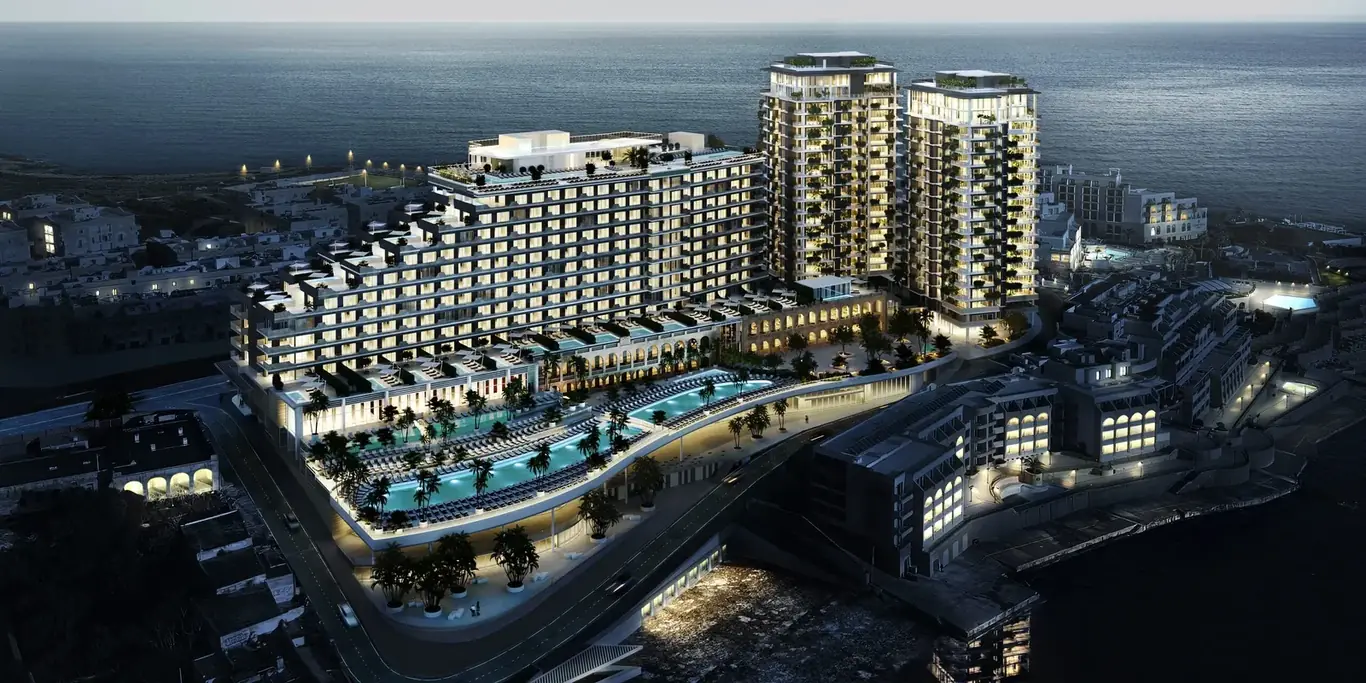
Professional architectural rendering is an investment with a measurable return — but only when it's applied in the right situations. Used strategically, it reduces approval cycles by up to 40%, cuts revision rounds by half, and directly drives pre-sales results. Used unnecessarily on a simple renovation with a long-standing client who already trusts your judgment, it's overhead that doesn't pay back.
The question isn't "is rendering valuable?" It almost always is. The real question is: "Is this specific project at this specific moment a situation where visualization creates enough value to justify the investment?" Here are seven situations where the answer is clearly yes — and where skipping visualization is likely to cost more than the renders would have.
Sign 1: You're Trying to Sell Something That Doesn't Exist Yet
This is the clearest and most common trigger. If the project is in design, in permitting, or under construction and you need to sell units, secure investment, or generate buyer interest before the building exists physically, visualization is not optional — it's the only tool that works.
Buyers cannot visualize abstract specifications. Floor plans communicate layout to trained professionals but communicate almost nothing to the buyers who need to commit to a purchase decision. The gap between what a floor plan shows and what a buyer needs to feel — the atmosphere of a space, the quality of the finishes, the relationship between the building and its setting — can only be bridged by photorealistic imagery.
Developments with professional exterior and interior rendering packages consistently achieve 40–50% pre-sales before groundbreaking. Projects that launch without visualization rarely exceed 15–20%. At any meaningful project scale, the revenue difference from that pre-sales gap is many multiples of the visualization cost.
Sign 2: You're Presenting to a Non-Technical Decision-Maker
Architects, engineers, and experienced developers can read floor plans and elevations. Planning boards, investors, homeowners, retail operators, and corporate real estate teams typically cannot — not with enough spatial confidence to make significant financial decisions.
When your primary audience can't fluently read technical drawings, you're asking them to trust your verbal description of something they can't see. That's a high-friction communication model that slows decisions, increases revision requests, and creates post-approval regret when the built result differs from what the client imagined.
A photorealistic render removes the translation burden entirely. Clients don't need to imagine the space; they can see it. They can give specific, actionable feedback instead of vague uncertainty. The whole dynamic of the client conversation changes when the design is visible rather than described.
Sign 3: You're Competing for a Commission or Contract
When you're competing against other firms for a project — whether it's a residential design commission, a commercial development contract, or a public architecture competition — the proposal that includes photorealistic visualization almost always beats the proposal that doesn't, at equal design quality.
Renders signal several things at once: investment in the client's project, confidence in the design direction, and the professional quality of the firm. When a client is choosing between two technically comparable proposals, the one with strong visualization looks more serious and more considered. It reduces the client's risk perception — they can see what they're buying rather than having to trust on faith.
Firms that consistently include rendering in their competition proposals close a higher percentage of pitches. The rendering cost is a fraction of the fee value of a single won commission. Across a year of pitching, the ROI is significant.
Sign 4: Your Project Involves Complex or Unusual Design
Standard buildings with conventional geometry and familiar typologies are more interpretable from drawings than unusual ones. When your design includes complex massing, non-standard spatial sequences, distinctive material combinations, or architectural features that clients have no prior reference for, the gap between drawing and reality is particularly wide.
A client who has never seen a double-height living room cannot reliably imagine one from a section drawing. A developer who has never built a mixed-use building with an activated streetscape cannot visualize that activation from a ground-floor plan. A planning board reviewing an innovative facade treatment cannot evaluate its visual impact from elevation drawings.
In all these cases, visualization doesn't just help — it's the only way to give stakeholders an accurate mental model of the project before it's built. Without it, approvals are granted based on incomplete understanding, and the chance of "I didn't expect it to look like that" post-construction regret increases significantly.
Sign 5: You Need a Planning or Regulatory Approval
Most planning submissions for buildings above a certain scale or in sensitive contexts require some form of visual impact assessment. Planning boards, design review committees, and community stakeholders evaluate projects based on how they'll look — not how they'll function technically — and that evaluation requires imagery, not just drawings.
Planning renders have specific requirements: they need to show the building accurately from designated viewpoint corridors, include accurate surrounding context, and sometimes demonstrate before-and-after visual impact from protected vantage points. These are technical requirements that a professional rendering studio can meet with appropriate accuracy.
Beyond formal requirements, there's a strategic benefit to high-quality planning visualization. A planning board seeing a well-executed render of a thoughtfully designed building in its context responds differently than a board evaluating abstract drawings. The visual quality of your submission sends signals about the quality of the project and the professionalism of the development team.
Sign 6: You've Had a Revision Problem on a Previous Project
If you've experienced significant late-stage design changes, post-approval revisions, or client dissatisfaction with a built result that looked different from what they expected, that's a direct indicator that your visualization approach isn't adequate for your client communications.
Most "I thought it would look different" moments are preventable with visualization at the right stages. A client who approved a floor plan without being able to visualize the finished space fully is a client who is likely to express dissatisfaction once the space is built and they can finally see it. That dissatisfaction — expressed as change orders, disputes, or reputation damage — costs more than the renders would have.
Introducing visualization systematically at the design stages where major decisions are being made — schematic design for spatial concept approval, design development for material coordination, pre-construction for final sign-off — closes the gap between client expectation and built reality. Revision problems often disappear when clients can see what they're approving.
Sign 7: The Project Has a Significant Marketing Component
Any project that needs to be marketed — a development pre-selling units, a commercial property attracting tenants, a hospitality project building pre-opening buzz, a luxury residential commission that will be featured in publications — requires professional visualization as marketing infrastructure.
Marketing audiences — potential buyers, investors, tenants, press, the general public — make judgments about projects in seconds based on visual quality. A blurry sketch or a flat floor plan communicates nothing about the quality, atmosphere, or value of what's being marketed. A photorealistic render communicates everything a marketing audience needs to feel interested and move forward.
The return on visualization in marketing contexts is measurable: properties with 3D tours receive 87% more online views than those without, and listings with professional 3D visualization generate 40% more qualified inquiries. Those statistics translate directly into marketing efficiency and, ultimately, into sales outcomes.
When You Might Not Need Rendering
Being honest about when rendering adds less value is important for the overall credibility of the business case. Situations where the investment is less clearly justified:
- Repeat clients with a strong established relationship — a client who has worked with you on multiple projects and has direct experience of how your designs translate understands your work in a way a new client doesn't. The translation burden is lower.
- Minor renovations where the design changes are incremental — if you're proposing a change that a client can evaluate by visiting the existing space, visualization may not add enough over that direct experience.
- Very early concept exploration — before massing and spatial decisions are reasonably settled, a photorealistic render can be misleading. Early-stage concept models or diagrammatic representations are sometimes more useful than prematurely precise renders.
- Projects where the client has specifically said they can read drawings — some sophisticated clients actively prefer working with drawings at certain stages. Read the audience.
For most projects above a certain complexity or dollar value, the visualization case is strong. For a full breakdown of service types and what each project stage typically requires, see our 3D visualization services page and pricing page. Browse our portfolio to evaluate quality and project range before committing.
Not Sure if Your Project Needs Rendering?
Describe your project and we'll tell you honestly what visualization approach makes sense — with a free estimate if you decide to proceed.
Ask Us About Your Project