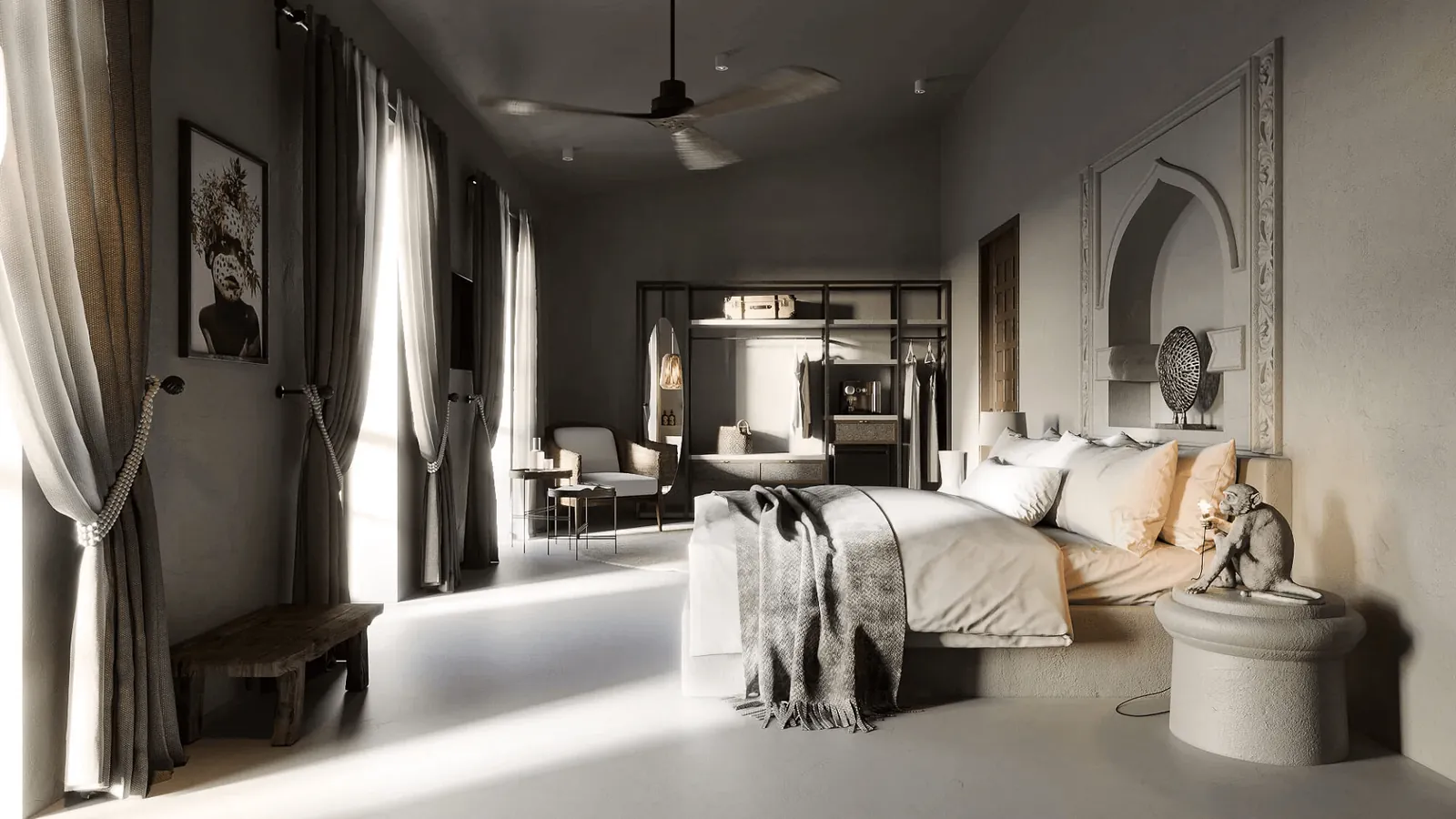
Hospitality projects have visualization requirements that are more complex than almost any other development type. A hotel is simultaneously a building, a brand, a guest experience, and a financial instrument. The rendering brief needs to serve all four audiences at once — investors evaluating returns, brand organizations enforcing standards, planning boards assessing neighborhood impact, and future guests choosing where to book.
In my experience, the hospitality projects that use visualization most effectively treat it as a strategic asset rather than a production deliverable. The renders are planned around stakeholder needs, commissioned at the moments they have maximum impact, and built to a brief that makes the property compelling across multiple use cases simultaneously.
This guide covers the full hospitality rendering stack — where renders are used, which spaces to prioritize, what makes hospitality briefs different, and how visualization supports the revenue strategy from development through opening.
Why Hospitality Projects Depend on Rendering More Than Most
Most development types can rely on completed projects to demonstrate track record and attract the next commitment. A developer who has built five successful office buildings can show photographs of those buildings when pitching the sixth. Hospitality is more complicated: brand positioning is highly specific to property type and market segment, and investors are financing not just a building but an operational business with RevPAR projections, ADR targets, and competitive positioning against nearby properties.
Architectural drawings communicate dimensions and layout. They don't communicate the atmosphere of a lobby at 9pm, the texture of a hand-woven wall panel, or the way breakfast light will read through floor-to-ceiling windows in a restaurant that's positioning itself as a neighborhood destination, not just a hotel amenity. That communication requires visualization.
The data confirms it: nearly 60% of hotel owners report that detailed renderings were essential to attracting investors for their projects. For branded hotel developments, this figure is likely higher — franchise organizations and flag brands require rendering submissions as part of their approval process regardless of developer preference.
The Hospitality Visualization Stack: When Renders Are Used
A hotel development project uses visualization at five distinct stages, each with a different primary audience and different requirements for what the renders must communicate.
Stage 1: Investor and Financing Presentations
Before a hotel is built, it needs to be funded. Investor decks for hospitality projects need renders that tell a complete story: the exterior as it will read from the street or approach, the lobby as a first impression and brand statement, and the key revenue-generating spaces — restaurant, bar, pool, meeting facilities — that establish the property's income projections.
At this stage, renders are selling a concept and a return on investment, not documenting a design. The emphasis should be on atmosphere, scale, and experience over technical accuracy. Renders that feel aspirational and experiential perform better in investor presentations than technically precise but emotionally flat ones. Brief the studio on the investment thesis — a lifestyle boutique hotel tells a very different visual story than a select-service extended-stay property, and the renders should reflect that positioning.
Stage 2: Brand and Franchise Approval
Branded hotels — whether full franchise or soft brand — require design approval from the flag organization before construction. Brand standards teams review rendering submissions to confirm that proposed spaces meet requirements for layout, lighting levels, material standards, and brand expression. These reviews have specific deliverable requirements: particular views that must be shown, specific rooms that must be represented, sometimes precise color calibration standards for how brand colors should read in the renders.
Working with a studio that has experience with brand approval submissions is meaningful at this stage. Knowing what a Marriott or Hilton standards review typically requires — which views, which detail levels, which FF&E elements need to be explicitly visible — can save multiple revision rounds. A generic rendering studio unfamiliar with flag requirements will produce technically competent renders that still require rework before approval.
Stage 3: Planning and Permitting Submissions
Hospitality projects in urban markets face significant planning scrutiny, particularly for height, massing, street-level activation, and impact on the visual character of the neighborhood. Exterior renders showing the hotel in context — from required viewpoints, at street level, in relation to neighboring structures — are typically required for planning submissions in most US markets.
Planning renders serve a different purpose from marketing renders: they need to be accurate and credible rather than aspirational. Exaggerated perspectives or atmospheric effects that make the building look smaller than it is will be noticed by planning staff and can undermine the submission's credibility. The goal is honest representation in a format that non-technical review board members can evaluate. Our guide on 3D rendering for permit applications covers planning submission requirements in more detail.
Stage 4: Pre-Opening Marketing
Hotels begin marketing before they open. Pre-opening campaigns drive early bookings that support pro forma revenue projections, OTA listing rankings, and press coverage ahead of the opening date. All of this requires visual assets before a single photograph can be taken.
Renders fill this gap completely — and in many ways they outperform post-opening photography for marketing purposes. Lighting is perfect. Styling is ideal. There's no construction equipment visible in the background, no scaffolding still up, no rooms that haven't been fully punched out. The marketing team has full control over every visual element. Renders can also show multiple room types simultaneously, at different times of day, in different seasonal contexts — flexibility that photography can't match.
Stage 5: OTA Listings and Direct Booking
When a hotel launches on Booking.com, Expedia, or its own booking engine, the first images potential guests see are the deciding factor in whether they click through or scroll past. High-quality renders of guestrooms and key amenity spaces — pool, restaurant, lobby — function identically to photography on OTA listings. Many properties launch with renders and replace them with photographs after opening, maintaining visual quality and booking momentum throughout.
The Five Spaces That Drive Hospitality Rendering Value
Not all hotel spaces are equal in their visualization value. These five views deliver the most across investor, brand, marketing, and planning use cases — and form the core of any hospitality visualization package.
Lobby and Arrival Sequence
The lobby is the hotel's first impression and brand statement. A render that captures the scale, materiality, and atmosphere of the arrival experience is the single most important deliverable in most hospitality packages. It will appear in investor decks, brand submissions, marketing materials, and press releases. The lobby render needs to work for all these audiences simultaneously — invest in it accordingly, both in terms of the brief quality and the production budget.
Standard Guestroom
The standard guestroom is what most potential guests actually book. Renders of the standard room — not just the suite — are essential for OTA listings and direct booking materials. Showing realistic room proportions honestly matters here: renders that make standard rooms appear significantly larger than they are damage booking credibility and drive negative post-stay reviews. Brief the studio on accurate room dimensions and resist the temptation to use wide-angle perspectives that mislead.
Signature Suite
Suite renders communicate aspiration and establish the upper limit of the brand promise. Even guests who will never book a suite are influenced by seeing one — it establishes that the property operates at a certain level of quality and attention. Signature suite renders appear in press materials, social media content, and travel publication coverage where the goal is positioning, not just booking conversion.
Food and Beverage Spaces
Hotels increasingly compete on F&B experience as much as room quality, and F&B spaces often have the most developed interior design — distinctive materials, custom lighting, unique furniture selections. Restaurant and bar renders are essential for pre-opening press coverage and local marketing that targets neighborhood guests, not just hotel guests. These spaces also photograph exceptionally well in renders because the density of designed elements produces rich, layered compositions.
Exterior and Site
The building exterior establishes the property's relationship to its location and conveys the architectural language of the brand. For urban hotels, a street-level perspective showing the entrance canopy and lobby glazing in context is standard. Resort properties need multiple exterior views — facade, pool terrace, site overview — to communicate the setting. Aerial renders are particularly effective for resort and mixed-use hospitality projects where the relationship between buildings and landscape is part of the experience.
What Makes Hospitality Briefs Different
Hospitality rendering briefs have specific requirements that differ from typical residential or commercial work. Understanding these requirements produces significantly better first drafts from the studio.
Brand guidelines first. Branded properties operate within specific brand standards that govern everything from the FF&E palette to signage placement in renders. Provide the full brand standards documentation to the studio before briefing begins — it governs the design intent more than any other single document.
Occupancy scenarios. Hotel lobbies and restaurants read fundamentally differently when empty versus occupied. Renders with carefully considered lifestyle elements — guests checking in, staff at reception, a group in the bar — communicate the operational reality of the space. Brief the studio explicitly on occupancy level and scenario for each space. A quiet boutique hotel lobby feels different from a busy full-service hotel during peak check-in.
Time of day specificity. Hospitality spaces are used at different times with different lighting conditions, and the renders should reflect the operational context. A breakfast restaurant needs a morning light render. A rooftop bar render should show the property at dusk with city lights. A pool terrace should show noon sun. Brief the studio on time of day for each space rather than accepting defaults.
Seasonal and contextual environment. Resort and destination properties are chosen partly for their natural setting. Renders that show the property in its best seasonal context — lush summer landscaping for a mountain resort, warm sunset light for a coastal property — support the experience narrative that drives bookings. Brief the studio on the environmental context you want to convey.
For a complete briefing checklist, read our guide on how to brief a 3D rendering studio. Hospitality briefs benefit from being more detailed than the baseline — the specificity of the design and the multiple audience requirements justify the extra briefing investment.
Balancing Interior and Exterior Renders in Hospitality Projects
Hospitality projects are among the few development types where interior and exterior renders are roughly equal in their strategic value. Residential developers typically prioritize exterior marketing; office developers prioritize massing and context. Hotels genuinely need both — exterior work for planning, investor, and brand purposes, and interiors for OTA marketing, booking conversion, and design approval.
In my experience, the mistake most hospitality developers make is front-loading the exterior work for planning and investor purposes and then rushing the interior renders for the pre-opening marketing campaign. The better approach is to plan the complete visualization package from the outset, sequence it to serve each stakeholder need in turn, and allocate budget proportionally to the revenue impact of each deliverable.
Our visualization services cover the full hospitality stack — exterior and interior rendering, aerial views, and floor plan visualization. Browse our project portfolio for hospitality rendering examples across hotel, resort, and F&B projects at different scales. For pricing, see our pricing page.
For a deeper comparison of interior and exterior rendering requirements, see our guide on interior vs. exterior rendering.
Working on a Hospitality Project?
Share your drawings and brand standards and we'll have a scope and estimate back to you within 2 hours.
Request a Free Estimate