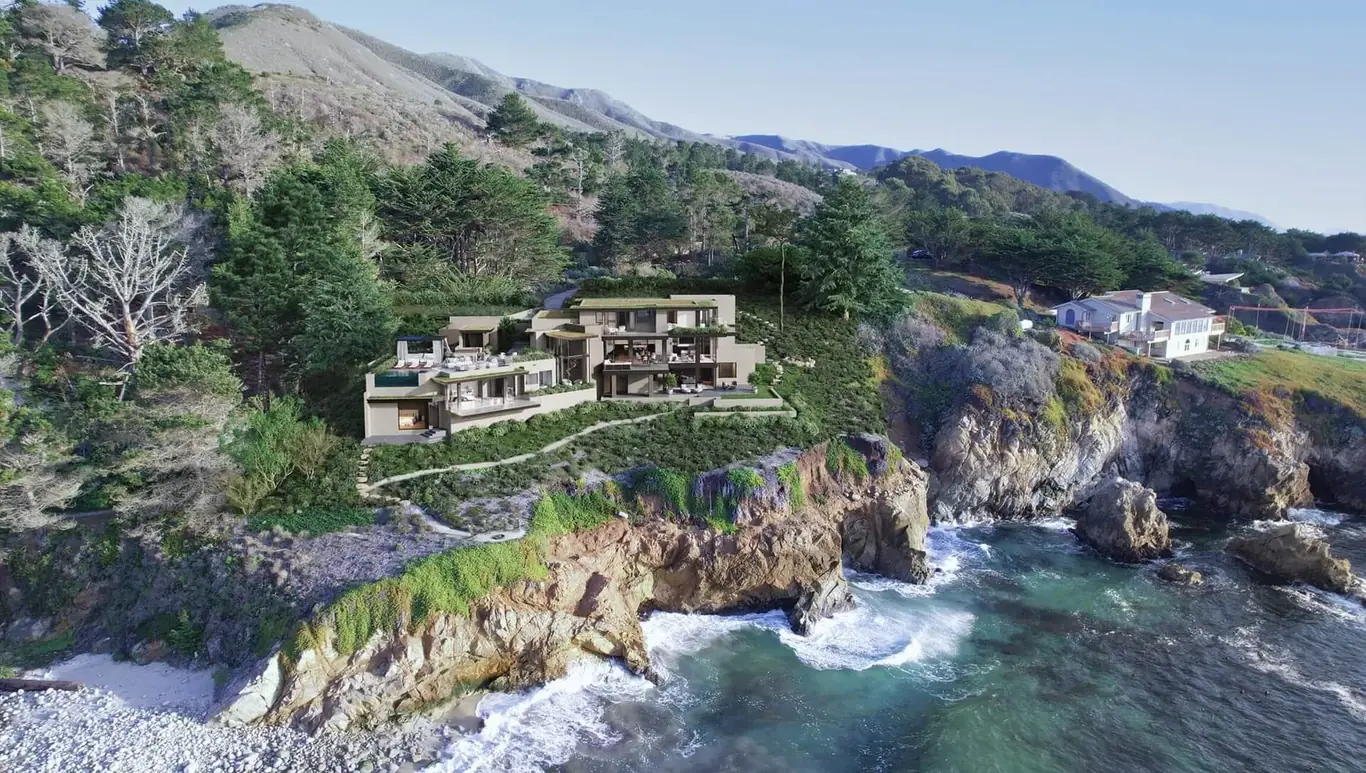
Luxury residential rendering is a different discipline from standard residential visualization. The buyers are sophisticated — many have encountered exceptional visual communication throughout their consumer life, from luxury hospitality to automotive and fashion editorial. They evaluate rendering quality differently from a first-time homebuyer or an institutional investor. Mediocrity is immediately visible, and it signals something about the property it represents.
The other distinguishing factor is that the cost of premium visualization is negligible relative to the transaction value. On a $4M property, a $5,000 render package represents 0.125% of the sale price. The ROI calculation is not subtle: premium visualization that moves a sale faster or eliminates the need for a price reduction more than pays for itself many times over. The question isn't whether to invest in high-quality rendering — it's what "high quality" actually requires in practice, and how to brief a studio to achieve it.
This guide covers the specific technical and artistic requirements that distinguish luxury residential rendering, which views deliver the most value, how the brief differs by project type, and how to judge studio capability before commissioning.
Why standard residential rendering isn't enough for luxury work
Standard residential rendering produces technically accurate imagery — correct proportions, reasonable materials, physically plausible lighting. For a $450,000 townhouse or a market-rate apartment building, this is sufficient. The buyer is evaluating whether the floor plan works and whether the price is reasonable.
A luxury buyer evaluates rendering quality as a proxy for the quality of everything else associated with the project. If the marketing materials look like they were produced quickly and cheaply, the inference — fairly or not — is that the same approach was applied to the design and construction. Renders that feel generic, that use obviously stock furniture, that have flat or default lighting, that show landscaping that reads as placeholder — these undermine the value story the property is trying to tell.
Luxury visualization is specifically calibrated to communicate not just what the home looks like, but what it feels like to live there. The quality of light through a specific window at a specific time of morning. The texture and richness of natural stone at close viewing distance. The way a deep overhang creates a transition between inside and outside that a floor plan can only describe abstractly. These qualities are what the buyer is paying for — and the renders need to communicate them before the buyer sets foot on site.
The six elements that define premium rendering quality
Premium rendering quality is not a single variable — it's the combination of six decisions that collectively create imagery that reads as aspirational rather than merely adequate.
1. Material precision
In standard work, a marble surface that reads as "marble" is sufficient. In luxury work, the specific marble matters: its veining pattern, its translucency, the way it catches specular light at grazing angles. A Calacatta Gold countertop should not look like a generic white marble. A rift-cut white oak floor panel should read differently from a standard oak library texture.
This requires actual material references — specification sheets, product pages, physical samples — to be provided to the studio. Asking the studio to "approximate" luxury materials from generic library assets produces renders that look like approximations. Specification-level material matching is a non-negotiable input for premium work.
2. Lighting art direction
Physically accurate lighting produces technically correct imagery. Aspirational lighting produces imagery that makes a buyer want to live in the space. These are different standards requiring different approaches.
Luxury renders are art-directed for a specific time of day, sun angle, and atmospheric quality — not just "accurate for the site orientation." Golden hour haze that warms the stone facade. Crisp morning light through east-facing bedroom windows. The specific way a pool terrace reads at dusk when interior and exterior lighting are in balance. This requires explicit briefing on lighting intent, not reliance on the studio's defaults.
3. Landscaping and site design
Exterior renders for luxury residential work live or die on landscaping quality. A well-designed building rendered with generic default trees, flat ground plane, and minimal site consideration looks ordinary regardless of architectural quality. The same building with mature specimen trees, carefully composed planting masses, accurate hardscape materials, and considered site furniture reads as the premium property it is.
Landscape architecture deserves its own section of the brief. Provide the landscape plan or specifications if they exist. If they don't, brief the studio on the landscape character — formal or naturalistic, native plantings or designed garden, Mediterranean character or Pacific Palisades contemporary — so the landscaping decisions are consistent with the design intent.
4. Custom furniture and FF&E
Generic library furniture is recognizable. Renders that use obviously catalog pieces — stock sectionals, identical pendant lights seen in dozens of other renders — undermine the sense of bespoke quality that luxury properties promise. For properties with custom or specified furniture, provide detailed references so the studio can model or source accurate 3D representations. For properties where furniture is still being designed, brief the studio on the style direction and approximate scale.
5. Post-production depth
Raw renders are processed in post-production to achieve the final image quality. Premium post-production is extensive: color grading that creates a specific mood rather than neutral accuracy, atmospheric depth that adds aerial perspective to exterior views, subtle lens effects that create a photographic feeling rather than a CGI feeling, and the careful addition of lifestyle elements — people, vehicles, ambient activity — that create a sense of inhabited life.
This work is time-consuming and requires genuine artistic judgment. It's also where much of the cost difference between standard and premium rendering lives. When evaluating studios, ask to see before-and-after comparisons of raw renders versus post-processed finals. The gap tells you a lot about the studio's post-production capability.
6. Compositional sophistication
Camera placement, lens selection, and compositional framing are creative decisions with significant impact on how a render reads. Luxury architectural photography uses deliberate compositional choices: foreground framing elements, leading lines, the relationship between built form and sky. Renders that apply the same care read as editorial images rather than documentation images. Brief the studio on compositional intent, or provide reference images showing the style of photography the renders should emulate. "Shoot it like a Wallpaper* feature" is more useful direction than "render the front facade."
Spec home vs. custom home: different render objectives
The briefing approach for luxury rendering changes significantly depending on whether you're working on a spec home built speculatively for an unknown buyer or a custom home designed for a specific client.
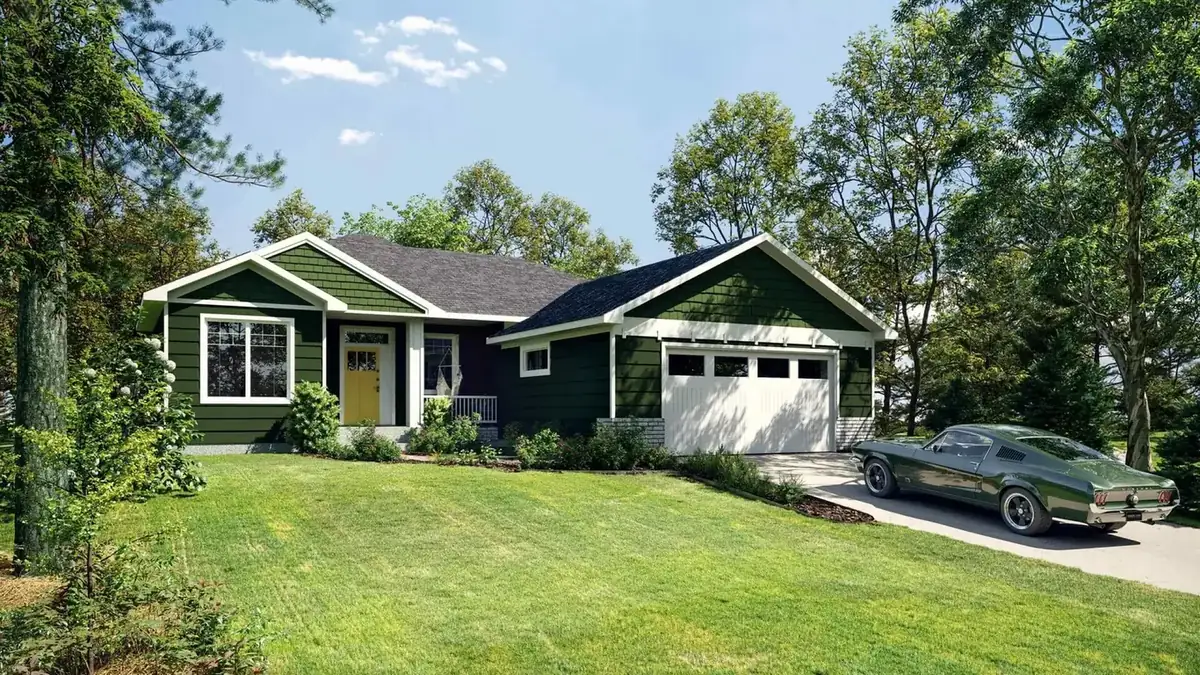
For a spec home, the render is pure marketing — designed to move an anonymous luxury buyer from online discovery to showing request. The render needs to communicate aspirational lifestyle broadly, targeting a buyer demographic rather than a specific individual. The furniture choices, the lifestyle elements in the renders, the lighting treatment — all of these should reflect what the target demographic values, not the developer's personal taste. For attached luxury residential — rowhouses and urban infill product — townhouse rendering addresses the specific briefing challenges of multi-story units with shared walls and street-facing entries.
For a custom home, renders serve a dual purpose: design communication to the client and eventual marketing material. The client needs to understand exactly what they're getting — specific material selections, spatial proportions, how their chosen furniture will look in the space. The renders need to be accurate as much as they need to be aspirational. This requires more detailed briefing on the client's specific selections and more revision iterations as the design is refined. It also means the renders can be more specific and individualized — they don't need to appeal to a broad demographic because there's only one buyer to convince.
Luxury residential sub-categories and how the package differs
| Project type | Primary render objective | Package focus | Key brief requirements |
|---|---|---|---|
| Custom single-family home | Design confirmation + pre-sale to specific client | Hero exterior, outdoor living, kitchen, primary suite — accuracy over aspiration | Confirmed material specs, client's furniture, site orientation, client lifestyle references |
| Spec home ($2M–$10M) | Pre-sale marketing to unknown luxury buyer | Hero exterior, outdoor living, kitchen, primary suite — aspiration over accuracy, lifestyle staging | Target buyer demographic, comparable sales in the market, art direction reference images |
| Ultra-luxury / estate ($10M+) | Confidential pre-sale to UHNW buyer or art/press placement | Hero exterior + full interior sequence (8–15 views), aerial, bespoke elements featured prominently | Privacy requirements for marketing, publication targets, custom elements documentation |
| Luxury condo / penthouse | Pre-construction deposit drive + floor premium justification | Hero exterior, view simulation, key interior spaces, amenity renders | Floor position, actual view, finish options per unit type |
View selection for luxury residential projects
Luxury residential marketing packages typically include 6–12 views. Choosing which views to commission requires thinking about the buyer's decision journey rather than just the building's visual features.
Hero exterior view — the primary marketing image: the approach from the street or driveway, composed at golden hour, showing the primary facade and entry sequence. This image carries the listing campaign. Invest in it disproportionately — a strong hero exterior has more commercial impact than any other single deliverable.
Outdoor living and pool — for properties with significant outdoor amenities, this is often the second most valuable view. Luxury buyers weight outdoor space heavily, and a compelling pool terrace or garden render can be as persuasive as the facade. It also performs strongly on social media and in publications.
Kitchen — in luxury residential, the kitchen is a primary selling point regardless of how much the buyer cooks. The materials, the light, the spatial generosity, the connection to dining and living — all of this reads in a well-composed kitchen render. Every luxury residential package should include it.
Primary suite — the bedroom buyers most want to imagine inhabiting. A primary suite render that captures morning light quality, material richness, and spatial proportion is a strong emotional trigger. The accompanying bathroom deserves its own view if the finishes merit it.
Living and entertaining spaces — the spaces that communicate how the home will be used socially. Renders showing these spaces with evening lighting and lifestyle elements tell a story about how the home actually lives, not just how it looks at noon.
View-oriented spaces — if the property has significant views, at least one render should make those views the visual centerpiece. Buyers paying a premium for a view location need to see the view prominently, not as background to the interior.
Interior vs. exterior: how they work together in luxury marketing
Exterior renders establish first impression and initial desire — they generate inquiries and get qualified buyers to the showing. They need to make the property immediately desirable before the buyer has processed any details.
Interior renders justify the price. A luxury buyer who has responded to the exterior and is considering a $4M purchase needs to understand what the interior experience actually delivers — the quality of the kitchen, the quality of the primary suite, the materiality throughout. Interior renders that match the quality of the architecture complete the story the exterior started.
For spec homes and custom builds not yet complete, interior renders also enable pre-sales. A buyer who can see the exact kitchen they're getting — specific stone slab, specific cabinetry finish, specific hardware — makes a more confident purchasing decision. Pre-sales generated through quality visualization can fund construction and eliminate carrying cost. For more on how interior and exterior renders serve different purposes, see our guide on interior vs. exterior rendering.
Briefing for luxury work: what to prepare
Premium visualization requires a more detailed brief than standard residential work. The studio needs to understand not just the physical specifications but the buyer demographic, the lifestyle associations the property should evoke, and the emotional experience you're trying to create.
- Complete materials schedule — manufacturer, product name, and finish code for all primary surfaces: stone, wood, tile, metal, glass. Specification-level accuracy requires specification-level input.
- Furniture references — product pages for specified pieces, or style direction and scale references for pieces not yet finalized.
- Site orientation and coordinates — for accurate sun position calculations on exterior renders. Golden hour at the right time of year requires knowing which direction east is.
- Atmosphere references — 3–5 images from architectural photography that capture the mood you're targeting. "Like a Robb Report feature" is useful direction.
- Target buyer profile — young tech executive, established family, international UHNW buyer. The lifestyle elements and staging choices should reflect who is actually buying the property.
- Landscape intent — even if final landscape design is incomplete, brief the character and approximate maturity level.
For a complete briefing checklist applicable to all project types, see our guide on how to brief a 3D rendering studio. Browse our portfolio to see luxury residential rendering across custom homes, hillside properties, and waterfront projects. For pricing details, see our pricing page.
Rendering a luxury residential project?
Share your drawings and specifications — we'll scope a premium visualization package for your property.
Request a Free Estimate