Architectural visualization has evolved from a niche service used mainly by high-end developers into a standard part of how buildings are designed, approved, marketed, and sold. The term covers a broad range of deliverable types — from a single still image of a building facade to an immersive virtual reality walkthrough of an unbuilt interior — and the right service depends entirely on what you're trying to communicate, to whom, and at what stage of the project.
In my experience, the confusion clients bring to a first studio conversation usually comes from one of two places: they've heard about the service but aren't sure which type they need, or they know what they want but don't know the right terminology to describe it. This guide maps out the full landscape of architectural visualization services — what each one is, when it's used, who commissions it, and what it costs relative to the others.
Still Rendering: The Foundation of Architectural Visualization
Still rendering — a single photorealistic image of an architectural space — remains the most-used and most versatile output type in architectural visualization. It's the baseline from which all other services are built, and in most projects it delivers the most value per dollar spent.
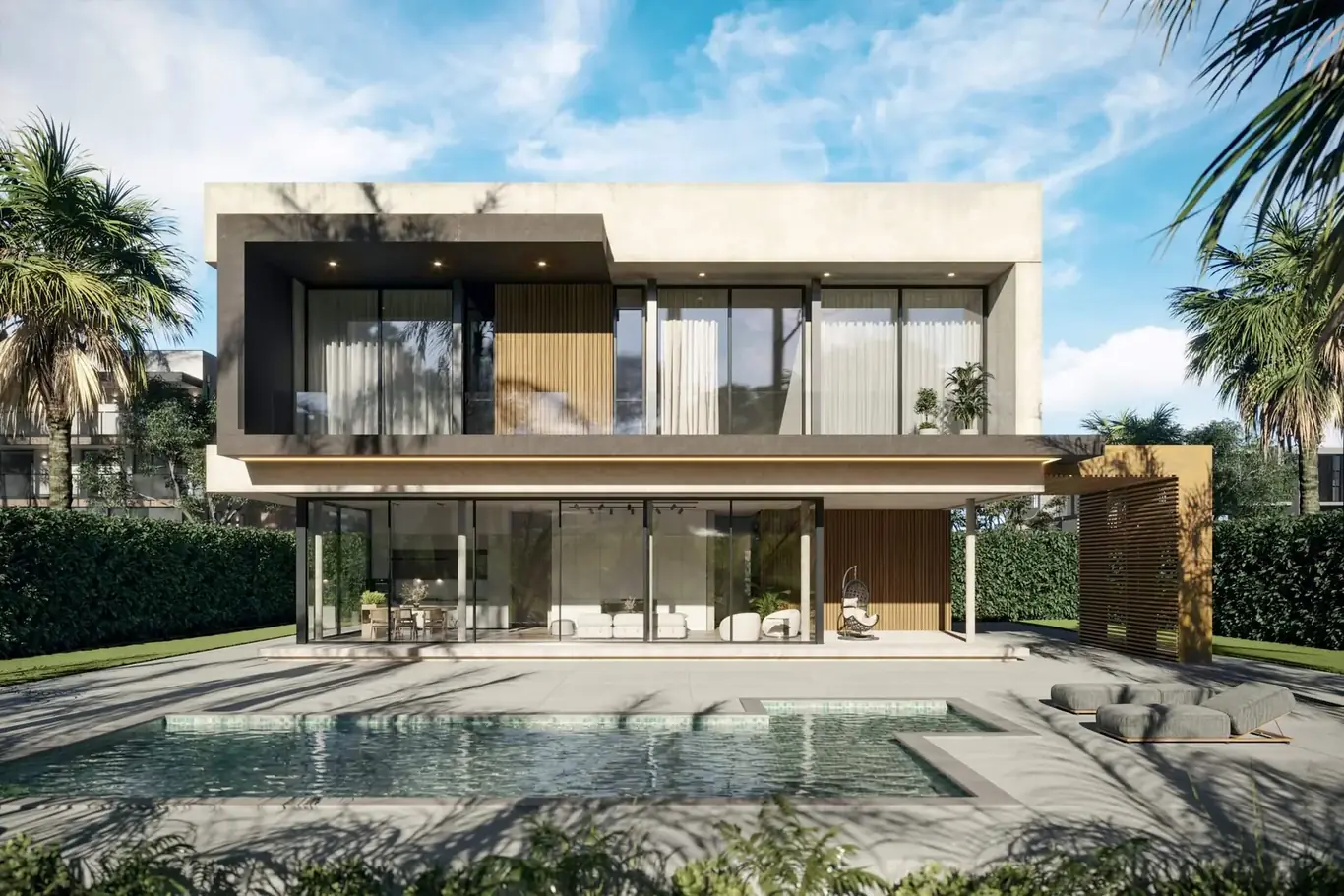
Exterior rendering shows the building's facade, its site context, landscaping, and the relationship between structure and environment. A single well-composed exterior render is the most common deliverable across all project types and client categories. Exterior renders serve investor presentations, planning submissions, marketing materials, and pre-sales campaigns. A standard exterior render takes 4–7 business days and typically costs $600–$1,500 depending on complexity and context. See our exterior rendering service for details.
Interior rendering shows a finished interior space — a living room, kitchen, lobby, hotel room, office floor — with materials, furniture, lighting, and decor accurately represented. Interior renders are used for residential pre-sales, hospitality marketing, commercial leasing, and interior design client presentations. An interior render takes 4–7 days and costs $500–$1,200. See our interior rendering service.
Aerial rendering shows the project from an elevated camera position — a bird's-eye view that communicates site organization, massing, building relationships, and neighborhood context. Aerial renders are essential for multifamily, mixed-use, and large-site projects where the overhead view communicates what no ground-level camera can. They take 5–8 days and cost $800–$1,800. See our aerial rendering service.
3D floor plan renders the floor plan from a slightly elevated oblique camera, showing spatial layout with furniture, materials, and room proportions visible. Real estate listings with 3D floor plans convert significantly better than those with conventional 2D plans. Floor plans take 3–5 days and cost $300–$600. See our 3D floor plan service.
Architectural Animation
Architectural animation produces a video sequence — typically 60–180 seconds — where a camera moves through or around the project, showing multiple spaces and perspectives in a single continuous experience. Animations are the most impact-efficient visualization format for investor presentations and launch events, because they communicate the full project without requiring the viewer to navigate between separate images.
Two primary animation formats are used in architectural visualization. Flythroughs move the camera through exterior spaces and around the building's exterior — showing site approach, facade character, landscape, and building massing. Walkthroughs take the viewer through interior spaces — through a lobby, into units, past amenity areas — showing the lived experience of the building.
A standard 60-second architectural animation takes 3–4 weeks and costs $4,000–$10,000 depending on scene complexity and the number of environments shown. Animations require a substantially more developed 3D model than still renders, with detailed geometry and materials across all visible spaces rather than a single optimized scene.
360° Virtual Tours and Interactive Visualization
360° virtual tour rendering produces a set of panoramic images — each covering the full 360° field of view from a single camera position — that are linked together into an interactive experience. Viewers can rotate to look in any direction and move between defined camera positions (rooms, floors, exterior spaces) by clicking on navigation hotspots.
Virtual tours are most commonly used for residential pre-sales and commercial leasing, where remote buyers and tenants want to explore a space without a physical visit. They're embedded in project websites, sent in email campaigns, and presented on tablets at sales offices and model homes. A typical residential virtual tour of 5–8 linked scenes takes 2–3 weeks and costs $2,500–$5,500.
VR (virtual reality) visualization extends this further — the rendered panoramas are experienced through a VR headset (Oculus, HTC Vive, or similar) for a fully immersive sense of scale and space. VR is used primarily for high-value sales presentations where the immersive experience justifies the additional technical setup. The underlying content is similar to a standard virtual tour; the difference is the delivery medium and the VR optimization required.
Photomontage and Context Compositing
Photomontage compositing places the 3D-rendered building into an actual photograph of the site, producing an accurate representation of how the project will appear from a specific real-world viewpoint. This service is required for many planning and environmental review submissions in California, where CEQA regulations often mandate visual impact documentation from designated viewpoints.
Photomontage production requires site photography at precise coordinates, camera matching between the photograph and the 3D model, and compositing work to integrate the render convincingly into the photographic background. The output needs to meet documentary accuracy standards that differ from marketing-optimized imagery. A single photomontage composite takes 7–12 days and costs $1,500–$3,000.
White-Box and Schematic Visualization
Not all visualization deliverables are photorealistic. White-box, clay, and grey-box renders remove material and texture information to focus attention on massing, proportion, and spatial organization. These are used at schematic design stage for internal design reviews, client massing presentations, and planning pre-application meetings where the design's form rather than its finish is the subject of discussion.
White-box renders cost 40–60% less than equivalent photorealistic output and take 2–4 days per image. They're the most cost-efficient option for early-phase visualization and options studies. For a full overview, see our article on white-box rendering in architecture.
Who Uses Architectural Visualization Services
The client landscape for architectural visualization spans every category of built environment professional.
Architects and design firms use visualization throughout the design process — from schematic massing studies through to photorealistic marketing imagery — to communicate design intent to clients, planning authorities, and contractors. Interior architects and designers use interior rendering to show clients what finished spaces will look like before construction begins.
Real estate developers are the largest client category by project volume. Developers commission visualization for investor presentations, planning submissions, pre-sales campaigns, and marketing materials at every stage of the development lifecycle. A typical multifamily project uses 8–20 renders across its lifetime; a large mixed-use development may commission 30–50 images plus animation.
Homeowners commission visualization primarily for design decisions — comparing renovation options, visualizing custom home designs, or showing ADU designs to planning departments. The scale is smaller but the value-per-dollar is often high because seeing a design before committing to it prevents expensive construction mistakes.
Marketing agencies and branding firms commission architectural visualization as content for real estate brand campaigns, development launches, and commercial property marketing. Their priorities are visual impact, brand consistency, and output quality across print and digital formats.
Contractors and construction companies use visualization for design-build proposals, client presentations, and construction progress communication. Pre-construction renders set accurate client expectations and reduce change orders during construction.
Choosing the Right Service for Your Project
Matching the right visualization service to your project requires answering three questions: What does your audience need to understand? What decisions need to be made before or after they see the visualization? And what is the design resolution — how fully developed are the drawings and specifications?
A planning submission needs accuracy — photomontage composites from designated viewpoints, photorealistic exterior renders showing materials and massing at true scale. A sales launch needs impact — a hero exterior render, lifestyle-staged interior renders, and ideally a 60-second animation or virtual tour. A design development review needs flexibility — white-box renders that can be revised quickly as the design develops. Commissioning the wrong service type for the context wastes budget and produces outputs that don't serve the purpose they were bought for.
Our full service range — exterior rendering, interior rendering, aerial rendering, 3D floor plans, animation, and 360° tours — is described on our services page. For project-specific advice on which service combination makes sense at your current stage, see our pricing page or request a scoped estimate. For a detailed overview of how these services connect to project phases, see our guide on architectural rendering styles and what to expect from a rendering studio.
Not Sure Which Service Fits Your Project?
Tell us your project type and stage — we'll recommend the right visualization package and deliver a scoped estimate within 2 hours.
Get a Recommendation