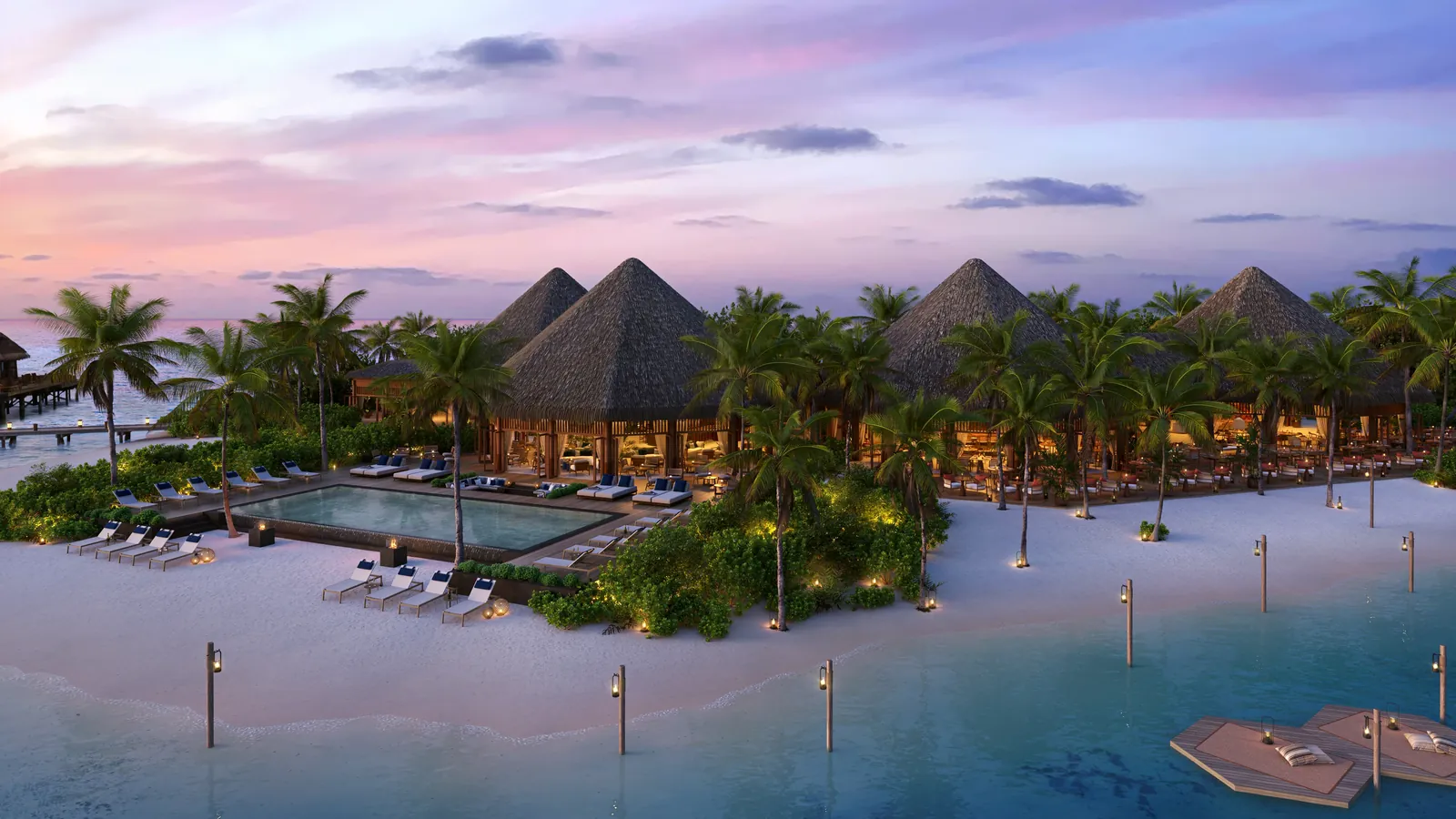
Landscape architecture rendering is technically a notably demanding specializations in architectural visualization. It's also the one most likely to be done poorly. The reason is straightforward: most rendering studios are optimized for building visualization. They have deep libraries of furniture, lighting fixtures, and material textures for indoor and exterior building surfaces. But vegetation — the element that defines landscape rendering — requires a completely different production approach, and a studio that does it well invests significantly in plant libraries, wind simulation, and lighting techniques that produce naturalistic results.
In my experience, the quality gap in landscape rendering is more visible to clients than in any other render type. A badly rendered plant — flat, repeated, with artificial distribution — immediately breaks the visual credibility of the whole image. Conversely, a well-rendered landscape, with believable plant scale and variation, naturalistic ground cover, and accurate California light, communicates the project's character more powerfully than the hardscape or structures.
This guide covers what makes landscape visualization technically challenging, how different outdoor project types are approached, what a complete site rendering package includes, and what to budget for the most common landscape rendering deliverables.
Why Landscape Rendering Is Different from Building Visualization
Three characteristics make landscape rendering fundamentally distinct from standard architectural rendering: the dominance of organic forms, the complexity of natural light in outdoor environments, and the need for species accuracy.
Organic forms — plants, water, terrain — don't follow the geometric regularity of building elements. Every tree has a different branching structure. Plant distribution in a naturalistic scheme is irregular and context-specific. Ground cover varies in density, height, and color. Rendering engines that excel at hard surfaces and precise geometry struggle with organic irregularity unless the studio invests in procedural vegetation tools and large plant libraries. The best results come from combining 3D vegetation models with photographic elements — a technique called photo-integration or CGI compositing — where real plant photography is layered into the rendered base image.
Natural outdoor lighting creates more complex interaction with surfaces than indoor architectural lighting. Sunlight filtering through a tree canopy produces dappled shadow patterns that change by the minute. Water reflects the sky at shifting intensities depending on camera angle and sun position. Pool water has a distinctive underwater caustic effect. Getting outdoor light right requires accurate sun positioning (using actual geographic coordinates and time of day), environment lighting that matches Los Angeles's characteristic clear-sky or marine-layer conditions, and careful post-production to enhance the natural warmth and contrast of the scene.
Species accuracy matters because landscape architects specify plants by species, and sophisticated clients — and their consultants — will notice when generic trees are substituted for specified ones. For a project with a drought-tolerant California native planting palette, the render should show recognizable species: Quercus agrifolia (Coast Live Oak), Salvia apiana (White Sage), Festuca californica (California Fescue), or whatever the design specifies. Generic broadleaf trees substituted for native oaks read as inauthentic and undermine the design narrative.
Site Visualization: Aerial and Ground-Level Views
Site-wide visualization is the category where landscape rendering delivers the most clarity. For a development project with complex site organization — multiple buildings, a network of pathways, phased planting, grading, and water management infrastructure — an aerial rendering showing the completed site is often the clearest single image in the entire visualization package. It communicates site organization, scale relationships, the balance between hardscape and planted areas, and how the development fits in its broader context.
Aerial site renders for landscape projects are different from the aerial views produced for building visualization. The camera is typically lower — 50–200m above grade rather than 500m+ — because the goal is to show the landscape's character rather than the building's form. Ground-level planting, terrace structures, water features, and outdoor furniture read at this altitude in a way they wouldn't from a higher vantage.
Ground-level views in a landscape package show the pedestrian experience: how a garden path reads at eye level, what the view looks like from a terrace, how a pool deck integrates with the surrounding planting. These views require careful camera placement to show the space as it will actually be experienced, which means briefing the studio on the primary circulation routes and gathering points in the design.
Plant and Vegetation Rendering Techniques
Professional landscape rendering uses a layered approach to vegetation: a 3D base model establishes the structure and massing of the planting, with key specimen trees modeled in full 3D geometry, while secondary and infill planting is handled through photo-real plant cutouts composited in post-production. This hybrid approach produces more naturalistic results than pure 3D rendering because the photographic plant elements have inherent variation and texture that 3D models still struggle to replicate exactly.
Mature tree representation is a notably technically demanding elements. A mature specimen oak has complex branching, canopy density variation, dappled shade, and a characteristic California sun-bleached quality to the foliage that requires significant artistry to replicate. Studios that invest in high-resolution tree models captured via photogrammetry — scanning real trees in 3D — produce noticeably better results than those using procedurally generated tree geometry.
For projects with extensive ornamental planting — perennial borders, ground-cover sweeps, grass plantings — the render needs to show mass and texture without attempting to model every individual plant stem. This is where post-production compositing skills are critical: layering photographic plant material over a rendered base in a way that reads as photorealistic rather than as an obvious collage requires experience and a good eye.
Seasonal representation is a consideration for projects where the design relies on seasonal interest — spring bloom, fall color, winter structure. Most landscape renders default to showing full-leaf summer conditions because that's when the design reads at its most complete. But some projects benefit from renders showing the space in a different season, particularly if the landscape architect has designed a compelling winter or spring character that would be lost in a single-season render.
Pool and Water Feature Rendering
Pool and water feature rendering is a specialized subset of landscape visualization that requires specific technical skills: realistic water surface rendering, underwater caustic effects, pool water color calibration, and water-edge detail. A poorly rendered pool — with flat, opaque water or unrealistic reflections — is a notably visually jarring elements in an outdoor render.
Water surface rendering involves two competing effects: reflection of the sky and surrounding environment on the surface, and transparency through the water to the pool floor. The balance between these depends on viewing angle — a grazing view from pool level emphasizes reflection; a view from directly overhead emphasizes transparency. Getting this right requires accurate water material settings and lighting calibration specific to the time of day being shown.
For residential projects with pool and landscape packages — a common combination in Los Angeles hillside, canyon, and beach residential work — the render sequence typically includes a ground-level hero view from the main entertaining area showing the pool and surrounding planting, a view from inside the residence looking out to the pool deck, and an aerial or elevated view showing the relationship between the pool, terrace, and garden. For luxury residential projects, twilight renders of pool spaces are particularly effective because the combination of warm interior lighting, pool water illumination, and ambient dusk light produces compelling imagery. See our guide to twilight rendering for more on this approach.
Hardscape and Paving Visualization
Hardscape — paving, retaining walls, steps, outdoor structures, pergolas, and built water features — needs to be rendered with accurate material representation, weathering, and scale. Common hardscape materials in California projects include concrete pavers, natural stone (bluestone, travertine, decomposed granite), ipe and redwood decking, and cast-in-place concrete. Each material has characteristic texture, color variation, and reflectivity that needs to be represented accurately for the render to be useful as a client communication tool.
Scale is a particular challenge in hardscape rendering. Paving patterns that look correctly proportioned in plan drawings often read unexpectedly large or small when visualized at human scale. A render of a proposed patio with a specific paver module shows clients how the paving will actually read underfoot — something that's very difficult to communicate from a plan. This is a notably practically useful applications of landscape rendering: resolving scale and material questions before construction rather than discovering unexpected results on site.
Pergolas, shade structures, and outdoor built elements need to be modeled with structural accuracy rather than as simplified stand-ins. If a pergola uses steel and glass, the render should show the lightness and translucency of the actual structure. A rough block representing the pergola gives clients no useful information about how the finished space will feel.
Typical Landscape Rendering Package and Pricing
Landscape rendering packages vary significantly based on site size, planting complexity, and how many outdoor elements need to be shown. The table below provides indicative pricing for common deliverable types.
| Deliverable | Timeline | Price Range |
|---|---|---|
| Ground-level landscape render (1 view) | 4–7 days | $650–$1,200 |
| Aerial site render | 5–8 days | $1,000–$1,800 |
| Pool and terrace render | 5–8 days | $800–$1,500 |
| Twilight / evening landscape render | 5–8 days | $900–$1,600 |
| Full residential landscape package (4–6 views) | 2–3 weeks | $3,500–$6,500 |
Projects with high planting complexity — extensive specimen tree placement, detailed ornamental planting, or multiple species requiring custom 3D models — carry a complexity premium of 20–40% over standard rates. For current pricing, see our pricing page.
What to Include in a Landscape Rendering Brief
A well-prepared brief makes a significant difference in both the accuracy and the production efficiency of landscape renders. For a landscape project, include:
- Site plan with all hardscape elements, planting areas, water features, and grade changes indicated
- Planting plan with species specified — even schematic species categories (e.g., "deciduous specimen tree, 12–15m at maturity") help the studio make appropriate choices
- Material specifications for all hardscape surfaces — paver type and module, stone species, wood species, concrete treatment
- Pool shell color and coping material if applicable
- Reference images showing the atmospheric quality and mood you're targeting
- Time of day preference — midday, late afternoon, or twilight
- Key camera positions — where is the primary viewing point for each render?
The camera positions question is especially important for landscape renders. Unlike building exteriors where the façade determines the view, landscape spaces often have multiple plausible camera positions and the best view is not always obvious. Spending 15 minutes with the landscape architect to agree on primary camera positions before briefing the studio saves revision cycles later.
Our exterior rendering services cover landscape and site visualization alongside building exteriors. For projects that include both building and landscape elements — such as single-family homes with pool and garden packages — see our guide to single-family home rendering for how we approach the combined package. For luxury residential projects with complex outdoor spaces, see our article on luxury residential rendering.
Have a Landscape or Outdoor Space to Visualize?
Share your site plan and planting intent — we'll scope a visualization package with pricing within 2 hours.
Request a Free Estimate