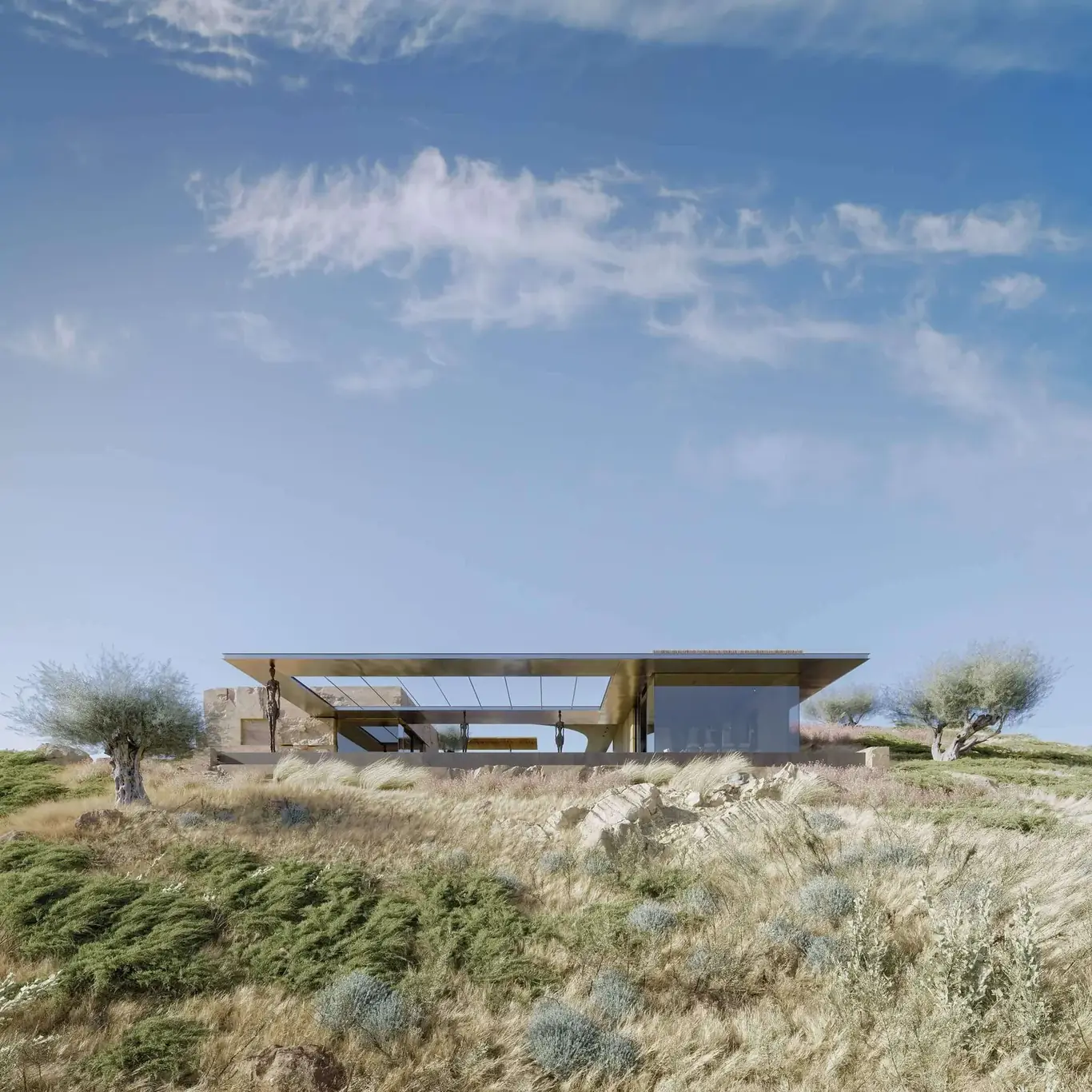
Single family home rendering is the most common architectural visualization project type — and also the most varied. A $400,000 production home and a $4 million custom residence both require exterior renders, but the brief, the level of detail, and the visual strategy are completely different. The same is true for the use case: a builder marketing spec homes to buyers, an architect seeking client approval on a custom design, and a homeowner planning a major addition are all commissioning renders, but for fundamentally different purposes.
This guide covers the different use cases and client types for residential rendering, what views to order for each scenario, how twilight and landscaping renders change the value equation, and what pricing and timelines to expect.
Who Uses Single Family Home Rendering and Why
The audience for residential rendering is broader than most people assume. The three primary client types are:
Custom home builders and architects use rendering at the design approval stage — before construction begins, and often before final construction documents are issued. The client needs to see and approve what they're spending $1–5M+ to build. A rendered exterior and key interior spaces — the entry, great room, kitchen, primary bedroom — turn an abstract set of drawings into a decision the client can actually commit to. Revisions at this stage cost a fraction of what they cost after construction begins. For attached residential product — row homes, urban townhomes, and for-sale infill housing — townhouse and row home rendering addresses the specific brief requirements that differ from detached single-family work.
Spec home builders and developers use rendering for pre-sales and marketing. A production builder with a new model needs to sell homes that aren't built yet. Exterior renders, 3D floor plans, and interior renders of the standard finish package are the primary sales tools for pre-construction buyer decisions. Builders producing multiple homes from the same model render once and amortize that cost across every sale.
Homeowners and renovators use rendering to visualize additions, remodels, and major upgrades — a second story addition, a kitchen remodel, a new rear elevation — before committing to the construction budget. Renders for homeowners are typically exterior-focused (what will the addition look like from the street?) or focused on the one or two rooms being significantly changed.
What Views to Order for Each Scenario
The right rendering package depends on the project type and what you need the renders to accomplish:
For custom home design approval: Start with the front elevation and one secondary view (typically rear or corner) for exterior; add the great room or living space and kitchen for interior. That's 3–4 renders, which is enough for a client to understand the design intent and approve proceeding. Expand to additional interiors only if specific rooms — a custom study, a wine cellar, a primary bathroom — are significant selling points of the design that the client needs to visualize.
For spec home pre-sales marketing: The front elevation render is non-negotiable — it goes on every listing, brochure, and sign. Add a dusk or twilight version of the same view. Twilight renders consistently outperform day renders in real estate marketing because warm interior light against a deep blue sky creates an emotional response that flat daytime renders don't. Add 2–3 interior renders of the highest-value spaces (kitchen/living area, primary bedroom, master bath) and 3D floor plans for each level.
For renovation and addition projects: An exterior render showing the completed addition in context with the existing structure is the primary deliverable. If the renovation includes a major interior reconfiguration, add 1–2 interior renders of the most-changed spaces. These renders help homeowners communicate the scope to contractors and neighbors, and help prevent change orders by making the end state explicit before construction begins.
The Case for Twilight Renders on Residential Projects
The single most impactful upgrade on any residential exterior render is commissioning a twilight or dusk version alongside the standard daytime view. The cost increase is modest — typically 30–40% more than the daytime render — but the marketing impact is disproportionate.
In a twilight render, the sky transitions from deep blue to amber at the horizon, interior lights glow warm through windows, landscape lighting activates along the driveway, and the overall composition reads as aspirational in a way that flat daytime renders rarely achieve. For real estate listing platforms where dozens of similar homes compete for buyer attention, the thumbnail difference between a daytime and twilight render can drive meaningfully more inquiry.
For custom homes where the client is making a final approval decision, twilight renders also serve a different purpose: they communicate the atmosphere of the home at evening, which for many homeowners is as important as how it reads in daylight.
Landscaping Detail: The Other Key Variable
The quality of landscaping in a residential render makes a significant difference to how the home reads, particularly for exterior views from the street. A well-rendered home with flat, generic landscaping looks like a template. The same home with mature trees, a properly scaled driveway, specimen plantings at the entry, and turf that reads as real creates a completely different impression.
For custom and luxury homes, brief the studio explicitly on landscaping intent. If the landscape architect has a planting plan, provide it. If not, describe the general direction: formal vs. informal, Southern California native vs. water-feature garden, traditional lawn vs. drought-tolerant xeriscape. A good rendering studio will request this context; if they don't, provide it anyway.
For spec homes and standard residential, detailed landscaping briefing matters less, but the level of care in the default approach varies significantly between studios. Look at prior residential renders to assess how they handle landscaping before selecting a vendor.
Pricing and Timeline
| Render Type | Price Range | Delivery |
|---|---|---|
| Exterior day view | $499–$1,200 | 4–7 days |
| Exterior twilight view | $699–$1,400 | 5–8 days |
| Interior view | $299–$800 | 3–5 days |
| 3D floor plan (per level) | $299–$500 | 3–4 days |
| Full package (3 ext + 3 int + plans) | $2,800–$6,000 | 7–10 days |
Custom homes with extensive detailing — intricate millwork, custom masonry, detailed landscape design — tend toward the higher end of exterior pricing. Production homes with a standard palette and repeating model are typically at the lower end because the brief is more constrained.
What to Provide for a Residential Brief
A complete residential brief includes:
- Floor plans with dimensions and room labels
- All four exterior elevations
- Roof plan
- Material and finish specifications — siding, roofing, windows, trim, garage door
- Site plan with driveway, landscaping areas, and orientation to the street
- Interior finish schedule for any interior renders (flooring, cabinetry, countertops, fixtures)
- Reference images for design intent and material feel
- Indication of which views are priority and when you need them
For renovation projects, include photos of the existing structure so the studio can model the context accurately and show the addition in its real setting.
Our exterior rendering services and interior rendering services cover the full residential scope. For full pricing, see our pricing page. For an overview of what renders are actually worth commissioning for your project type, see our guide on signs your project needs 3D rendering.
Designing or Building a Home?
Send us your drawings and we'll scope a rendering package with pricing within 2 hours.
Request a Free Estimate