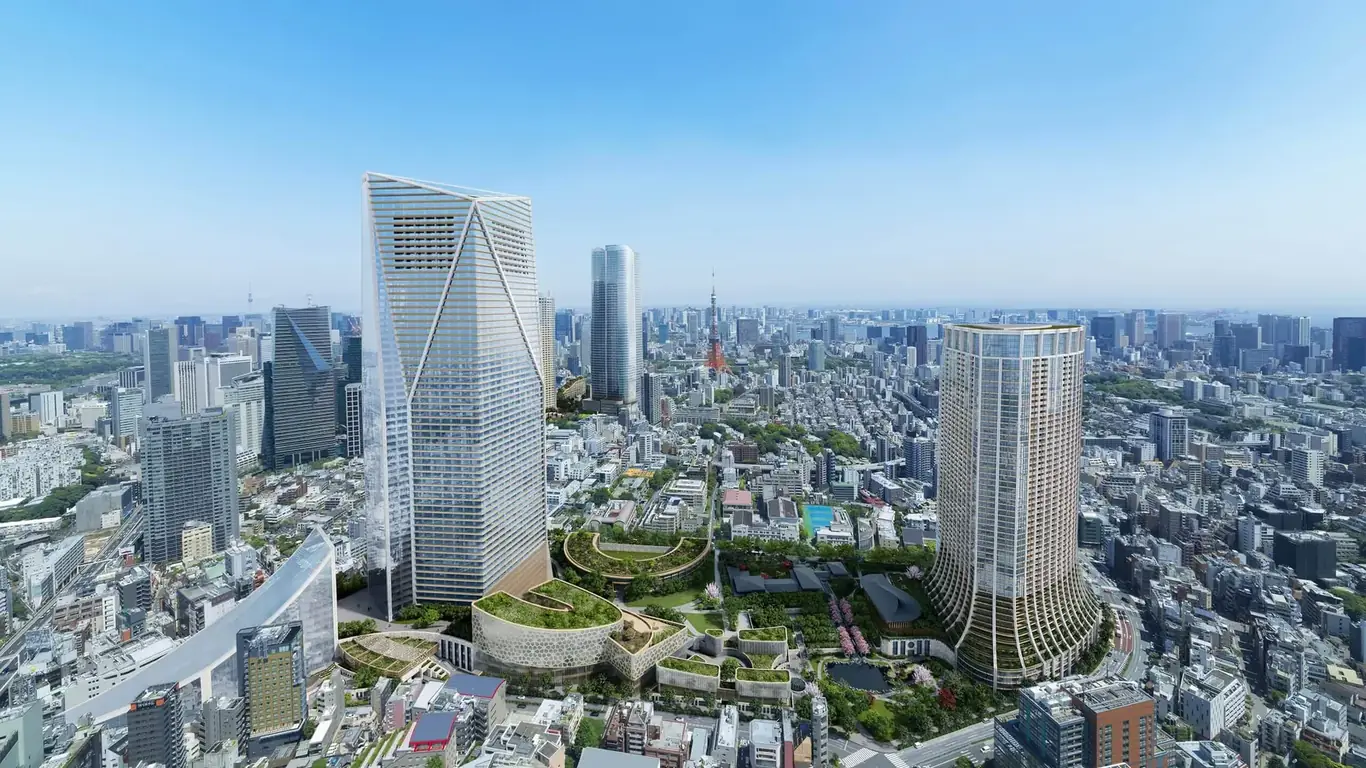
Office building rendering isn't a single task — it's three distinct visualization challenges depending on what the project is and who the audience is. A speculative Class A tower competing for tenants requires different renders than a corporate headquarters where the occupant is also the developer, and both are different from a tenant fit-out where the building shell is already built and only the interior is changing.
Getting this right — matching the render strategy to the project type — determines whether you're spending budget on visuals that actually move decisions or producing technically competent renders that nobody uses strategically.
Speculative Office: Selling Tenants on an Unbuilt Building
Speculative office development — where a developer builds without a committed anchor tenant and leases to the market after completion — is where 3D rendering does the most commercial work. The leasing campaign is typically running well before the building is finished, and the entire value proposition has to be communicated through renders.
The visualization priorities for spec office are:
Facade and street presence. The exterior render is the first thing a prospective tenant's real estate broker shows them. It needs to communicate building class, quality of materiality, and the quality of the street-level experience. For Class A office, the lobby entrance, ground-level retail, and streetscape treatment are as important as the tower itself.
Lobby interior. The lobby is the daily arrival experience for every tenant. A single polished lobby render communicates building quality more effectively than three exterior views. For Class A developments positioning against strong competition, the lobby render is non-negotiable.
Typical floor plate. Most tenants want to see a rendered view showing how a standard floor plate will read with workstations and collaboration areas — not because they'll use the exact layout, but because it demonstrates floor efficiency, ceiling height, and natural light access. A floor plate visualization can be either a 3D rendered view or a detailed 3D floor plan with furniture, depending on the project's positioning.
Amenity spaces. Post-pandemic office tenants evaluate amenity quality seriously: conference centers, wellness facilities, bike storage, and rooftop terraces all appear in leasing marketing materials. Each major amenity that differentiates the building warrants its own render.
Aerial context view. For large office developments, an aerial render that shows the building in its district context — transit access, neighboring amenities, highway visibility — communicates the strategic location advantages that floor plans can't convey.
Owner-Occupied Headquarters: Design Approval and Brand Expression
When a company is developing its own headquarters, the visualization use case shifts from leasing to internal decision-making and brand communication. The renders are typically for:
Executive design approval. Corporate leadership rarely reads architectural drawings. Renders allow executives to see and approve the building design without needing to interpret technical documents. For headquarters projects where the CEO or board has design input, getting renders in front of decision-makers early prevents expensive late changes.
Brand and culture communication. Headquarters renders often appear in internal communications, employer branding campaigns, and press releases about the company's facilities. These renders have a longer shelf life than leasing materials and warrant higher production quality. The brief should explicitly address how the building communicates company values.
Phased interior rollout. Large headquarters projects often phase construction by department or floor, with interior fit-out following structural completion. Renders allow interior design teams to preview and align on finish standards before installation begins, reducing late-stage changes to millwork and finishes that are expensive to correct.
Tenant Fit-Out: Interior Renders as Design Approval Tools
When a tenant is designing their space within a completed or under-construction base building, the rendering need is entirely interior. The shell is fixed; only the fit-out is being designed and approved.
Interior renders for tenant fit-out typically focus on: reception and arrival areas (the brand statement), typical workstation zones (showing density and daylight), conference rooms, breakout and collaboration spaces, and any premium amenity the tenant is incorporating — a café, a wellness suite, a boardroom with exceptional views.
These renders have high business value for tenants because they're used to manage stakeholder expectations internally, present the project to employees, and get final approval on expensive FF&E selections. A $300–$700 interior render that prevents a $50,000 change order to custom millwork is a straightforward ROI.
Night Renders for Commercial Office
For office towers and commercial mixed-use buildings, night renders serve a distinct purpose from twilight residential renders. A commercial office building illuminated at night — facade lighting active, upper floors glowing, streetscape lit — communicates a certain kind of urban presence that daytime renders don't capture. They're particularly useful for buildings with significant facade lighting design, for towers where the crown treatment is architecturally important, and for any project where the building's contribution to the city skyline is part of the value proposition.
Pricing and Timeline for Commercial Office Rendering
| Render Type | Price Range | Delivery |
|---|---|---|
| Exterior / facade (per view) | $800–$2,500 | 5–10 days |
| Lobby interior | $600–$1,400 | 4–7 days |
| Typical floor / tenant space | $500–$1,200 | 4–6 days |
| Aerial context view | $999–$2,500 | 7–10 days |
| Night / facade lighting render | +30–40% on base | +1–2 days |
Commercial office rendering sits at the higher end of the architectural rendering price range because of the complexity of curtain wall systems, glass reflectivity, urban context modeling, and the precision required by exacting corporate and institutional clients. For a full leasing campaign package — 3 exterior views, lobby, floor plate visualization, 2 amenity renders, aerial — budget $12,000–$20,000 for a Class A tower.
What to Provide for the Brief
Office building briefs require more complete documentation than residential because errors in massing or facade treatment are visible and consequential at scale. Provide:
- Full exterior elevations for all sides
- Floor plans for lobby level and typical floor
- Facade material specification — curtain wall system, panel types, window treatment
- Facade lighting design intent if applicable
- Site plan with street context and pedestrian access
- Aerial photography or satellite imagery for context modeling
- Interior finish schedule for any lobby or tenant renders
- Branding guidelines if the building has a named identity
Our exterior rendering and interior rendering services cover commercial office at all scales. For the comparison between exterior rendering and aerial views for commercial projects, see our guide on commercial vs. residential rendering. See our pricing page for current rates.
Working on a Commercial Office Project?
Send us your drawings and we'll scope a rendering package with pricing within 2 hours.
Request a Free Estimate