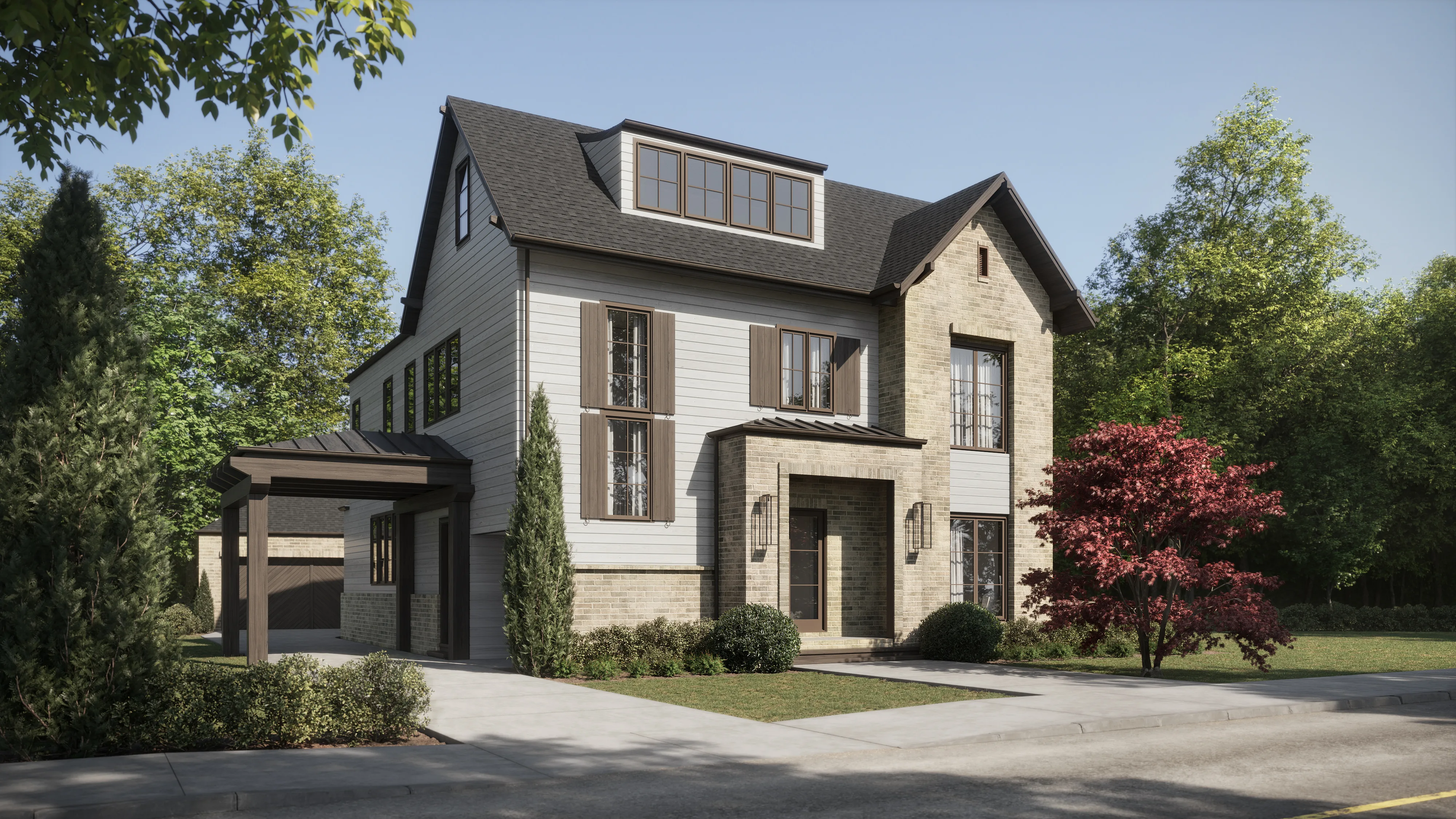
Parking structures are among the most difficult buildings to make architecturally compelling, and the most difficult to communicate to planning boards and communities that frequently oppose them. They are large, repetitive, and functionally constrained in ways that limit design flexibility. 3D rendering for parking structures has a specific role: communicating that the building has been designed with genuine care for its urban context, even when the functional brief is inherently limited.
I've produced renders for parking structures across the full range — standalone municipal garages, campus parking structures for universities and hospitals, mixed-use development parking levels, and structured parking for retail and office complexes. Each context has different visualization requirements, but the consistent challenge is making a building that could look institutional feel contextually appropriate and architecturally considered.
Planning and Entitlement: The Primary Visualization Use Case
Most standalone parking structures require some form of planning review, and in urban areas with active design review boards — downtown districts, historic neighborhoods, commercial corridors — the facade design of a parking structure receives significant scrutiny. Planning staff and community members are acutely aware that a poorly designed parking structure can damage a streetscape for decades.
Renders for parking structure planning submissions need to show the building's facade design in its urban context — how it relates to adjacent buildings, what the pedestrian experience of walking past it is like, and how the ground floor activation (retail liner, active facade elements, pedestrian entries) contributes to or detracts from the street environment. The renders should show the building at street level, from the pedestrian's eye view, at midday conditions that accurately represent the visual impact.
For planning applications in California cities, context-accurate renders — showing the existing buildings at their correct scale on either side of the proposed structure — are standard practice. These context renders allow planning commissioners to evaluate the massing relationship and facade compatibility in a way that a rendering of the structure in isolation cannot support.
Facade Design Options: Using Renders for Design Development
Parking structure facades often go through multiple design iterations before the final approach is resolved. Render alternates — showing two or three facade design options applied to the same building model — are a cost-effective tool for the design development process and for client or planning review sessions where options need to be compared visually.
The most common design variables for parking structure facades are: the material palette (concrete, steel, perforated metal screen, precast panels, brick, CMU); the screening system for the parking levels (perforated metal, brise soleil, planted trellis, screen wall with openings); the treatment of the ramp interfaces and level changes; and the ground floor activation design (retail bay dimensions, entry design, signage integration).
Producing render alternates from a single base model — changing only the facade treatment — typically costs $300–$600 per alternate after the base model is established. For a project going through three facade options, this adds $600–$1,200 to the base render cost. This investment is well justified when the alternative is multiple rounds of design development and planning review without a clear visual comparison tool.
Mixed-Use Integration
Parking structures in mixed-use developments — ground-floor retail below residential towers, podium parking under office buildings, airport parking structures with hotel connections — require visualization that shows the parking component as part of the larger mixed-use composition rather than as a standalone building.
These renders typically emphasize the transition between the parking structure and the primary building use: the retail liner at grade that screens the parking behind it, the residential tower that rises above the parking podium, the hotel entrance that bridges from the parking structure to the main building. The goal is to show the parking as subordinate to the primary use — present but visually recessive in the overall composition.
For aerial rendering of large mixed-use developments, the parking structure's roof level — often used for future development, temporary surface parking, or amenity space — is visible and needs to be shown with appropriate landscaping or programming rather than as a raw concrete deck.
University and Hospital Campus Parking
Universities and medical campuses build significant parking structures as part of ongoing campus development programs. These structures need to be compatible with the campus architectural vocabulary — not generic commercial parking garages — and they typically go through institutional design review processes that require visualization.
Campus parking structure renders have specific requirements: the building needs to show compatibility with the campus's established design language (brick and precast for a traditional campus, glass and metal for a contemporary campus), the pedestrian connections to the campus circulation need to be shown, and the structure's relationship to campus landscape elements needs to be visible.
For university clients in particular, renders of the structure's entrance lobbies, pedestrian bridges, and ground-level connections to campus paths communicate the pedestrian experience of the structure — how students and faculty will actually use it — rather than just its massing and facade.
Design-Build Proposals
Many parking structures are procured through design-build contracts, where the contractor team includes design services. For design-build proposals, renders of the proposed structure — showing the facade design, the ground-floor activation, and the site relationship — differentiate proposals that can show the client what they're getting from those that rely on schematic drawings and specifications alone.
Design-build proposal renders for parking structures don't need the same level of detail as marketing renders — the goal is to show the design concept and demonstrate that the team has thought about the architectural quality of the structure, not to produce a final marketing image. A single exterior render showing the facade design and street relationship, plus a view of the ground-floor activation, is typically sufficient for a parking structure design-build proposal.
Full pricing for exterior rendering is on our pricing page. For contractors using rendering in design-build proposals, see our article on 3D rendering for contractors.
Designing or Proposing a Parking Structure?
Share your facade design and site plan — we'll scope a render package for planning or design-build purposes with pricing within 2 hours.
Request a Quote