Mixed-use development has a visualization problem that most other building types don't: the renders need to serve five fundamentally different audiences at the same time. Planning boards need to see massing and neighborhood integration. Equity investors need to see the asset quality and market positioning. Retail tenants need to see the street-level activation and customer flow. Residential buyers need to see the units and amenities. And the public needs to see that the development will be a positive addition to the neighborhood.
A render that's great for investor presentations may be wrong for a planning submission. A retail leasing render may actively conflict with the residential buyer marketing. Getting the sequencing and the brief right for mixed-use is more complex than for single-use development — but the payoff is proportional, because the stakeholder set is larger and the stakes at each stage are higher.
The Five Audiences and What They Need
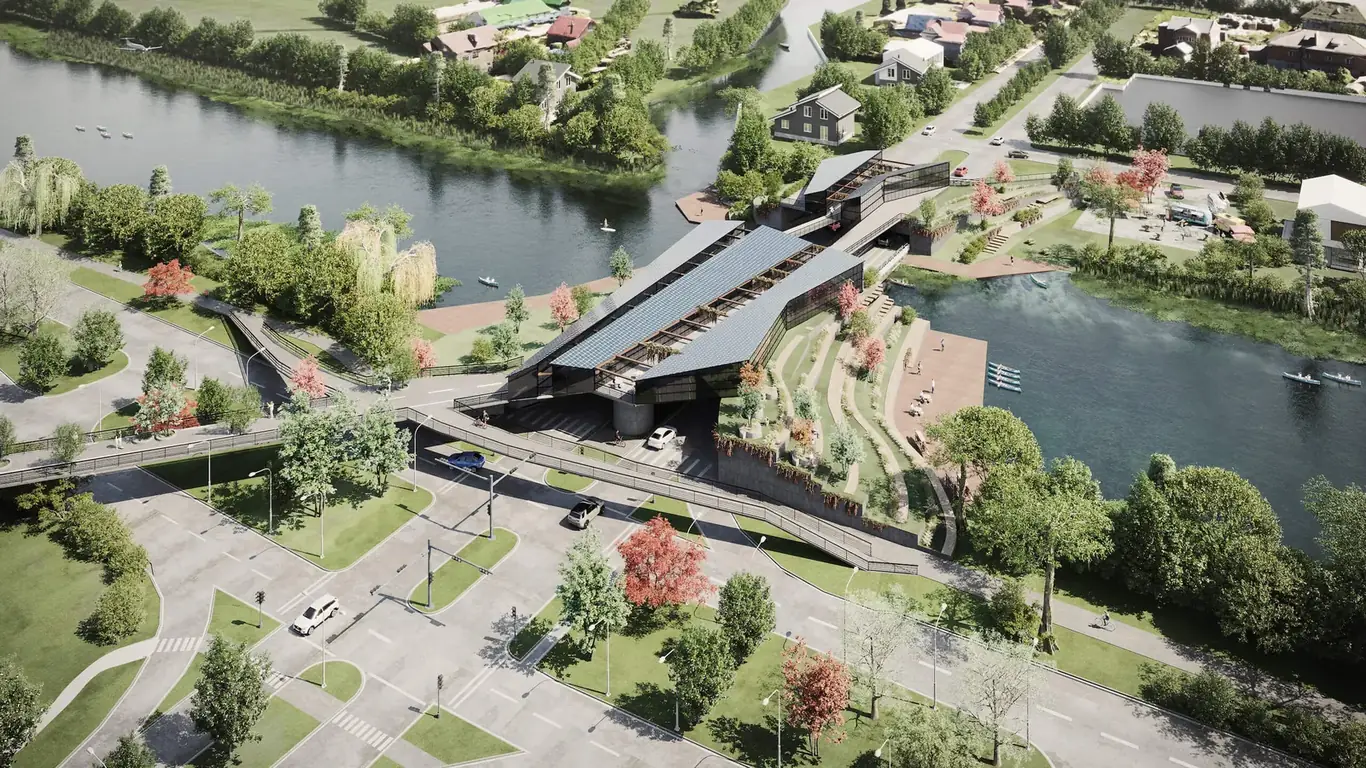
Planning boards and city staff evaluate massing, materials, street-level impact, and how the development fits the existing neighborhood. They need accurate aerial views showing the project in full context, street-level elevations at required viewpoints, and for large projects, photomontage composites showing the building on the actual streetscape. These renders must be geometrically accurate and produced to specification. They are not marketing renders; they are technical exhibits.
Equity investors and lenders are evaluating the asset quality and the probability of achieving the pro forma. For mixed-use, this means showing: the residential units and amenity package that supports the rent assumptions, the retail activation strategy and street presence that drives foot traffic, and the overall development quality that justifies the Class A underwriting. The investor package needs renders that communicate value, not just design intent.
Retail tenants and their brokers evaluate the street-level commercial environment: retail frontage, pedestrian volume, visibility from traffic, co-tenancy, and how the retail positions relative to the residential and office population above. Street-level renders showing the activated frontage at peak pedestrian times — with people, visible signage, outdoor seating — are the primary leasing tool. For anchor tenants, a dedicated space render showing their unit's proportions and street visibility may be required.
Residential buyers and renters evaluate the units and the amenity package. They need interior renders of representative unit types, 3D floor plans, and renders of the amenities that differentiate the development: rooftop, lobby, fitness center, co-working space. These renders run during the pre-sales or lease-up campaign and are distributed across listing platforms, property websites, and marketing materials.
The community and local media form opinions about the project based on how it's presented publicly — at community meetings, in planning commission hearings, and in local press. High-quality aerial and street-level renders that show the development as a neighborhood asset, with active ground-floor retail, landscaped public space, and design quality, shape the community narrative. These are often the renders that receive the most scrutiny, even though they may have the least direct commercial function.
Sequencing: The Efficient Approach
The mistake most mixed-use developers make is commissioning renders reactively, responding to the next stakeholder need rather than planning the full visualization scope at the outset. This results in higher total cost, inconsistent visual identity across the project's marketing materials, and renders that were briefed for one audience being misused for another.
The efficient approach:
Phase 1 — Entitlement (schematic design stage): Commission the aerial view and street-level exterior renders required for planning submission. Brief them for accuracy — not for marketing impact. These renders establish the base 3D model from which all subsequent renders will be produced.
Phase 2 — Investor and financing (design development stage): Expand the same model to produce investor-quality renders: refined exterior hero views, lobby, key amenity spaces, and representative unit interiors. The incremental cost of expanding a model that's already built is significantly lower than starting fresh.
Phase 3 — Retail leasing: Produce street-level activation renders showing the commercial frontage with retail tenants in operation — people on sidewalks, outdoor dining, visible signage — to support the broker and tenant outreach campaign.
Phase 4 — Residential pre-sales: Produce the full residential marketing package: unit type renders, 3D floor plans, polished amenity visuals. These often require a higher level of lifestyle staging and post-production than earlier-stage renders.
The Street-Level Activation Render: Most Underutilized Asset
The street-level render showing the retail frontage in operation is the most underutilized visualization asset in mixed-use development. Most developers prioritize the aerial and the tower exterior; the street-level retail experience is often treated as secondary. This is a mistake for two reasons.
First, retail tenants and their brokers evaluate the pedestrian environment before they evaluate the space. A render showing an activated sidewalk — breakfast crowd at a coffee shop, evening pedestrian traffic past a restaurant, weekend retail foot traffic — communicates the commercial opportunity far more effectively than a technical elevation of the retail frontage.
Second, community perception of the development is largely formed by how the street level will look and feel. A planning submission that includes a compelling street-level activation render changes the community conversation from "another big development" to "a neighborhood destination."
Pricing Guidance for Mixed-Use Packages
| Render Type | Price Range | Notes |
|---|---|---|
| Aerial / master view | $1,200–$3,000 | Large sites with complex context run higher |
| Street-level exterior | $800–$2,000 | Per view; retail activation adds lifestyle staging |
| Lobby / amenity interior | $600–$1,400 | Per space; shared model reduces cost when multiple views |
| Residential unit interior | $399–$900 | Per unit type; package pricing for multiple types |
| 3D floor plan | $349–$700 | Per level; per unit type |
| Full package (all phases) | $18,000–$40,000+ | Depends on building scale and unit mix |
Mixed-use visualization is the most expensive architectural rendering category per project because of the number of distinct spaces, the multiple audiences requiring different render treatments, and the scale of the 3D model. However, the per-render cost drops significantly when the full scope is planned and contracted together rather than commissioned piecemeal.
Our exterior rendering, aerial rendering, and interior rendering services cover the full mixed-use stack. For planning submission requirements specifically, see our guide on 3D rendering for planning and permit applications. For how apartment complex renders fit within a mixed-use package, see our guide on apartment complex 3D rendering. Mixed-use podium developments typically include structured parking as a major component; parking structure rendering is often required separately for planning submissions to demonstrate how the garage integrates at street level.
Working on a Mixed-Use Development?
Send us your site plan and we'll scope a multi-phase visualization package within 2 hours.
Request a Free Estimate