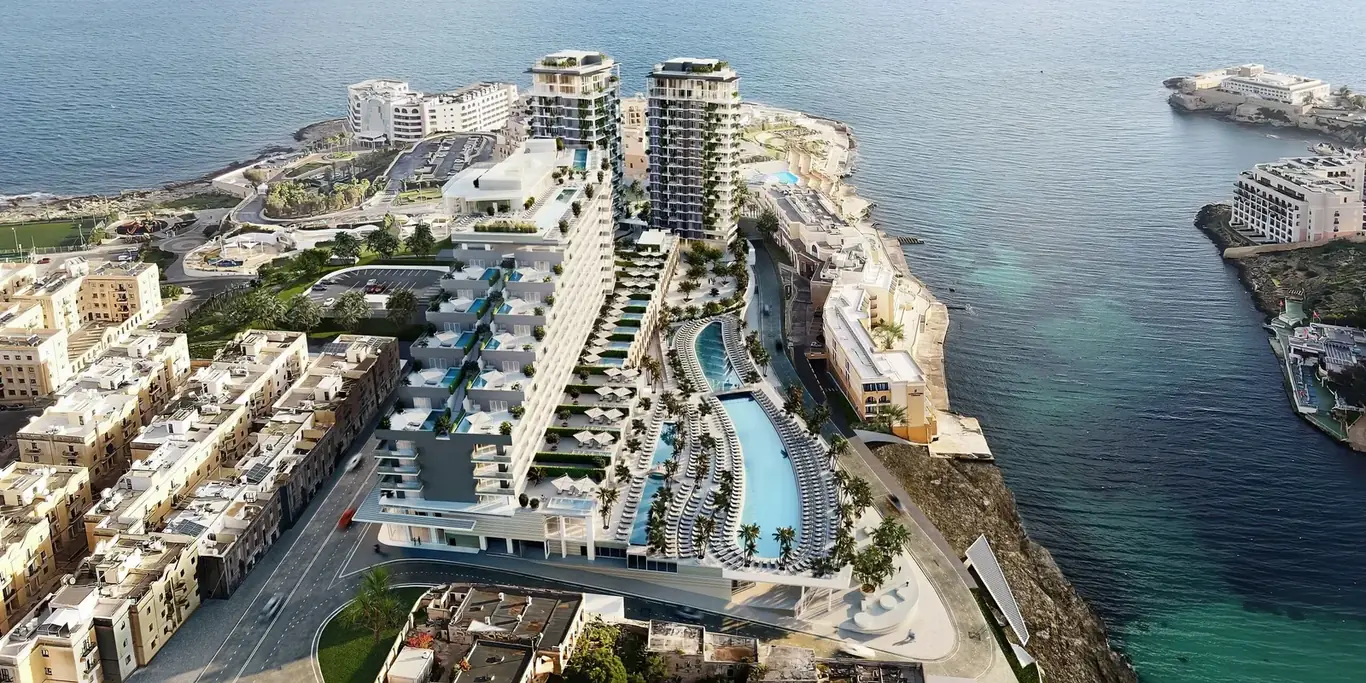
Architectural visualization is undergoing the most significant technology shift since computer rendering replaced physical model photography in the 1990s. The combination of real-time rendering engines, AI-assisted production workflows, and immersive delivery formats is changing what's possible, what's expected, and what everything costs. For architects and developers who commission renders, understanding these shifts helps you get more value from visualization budgets and avoid being sold yesterday's technology at today's prices.
I'll give you my perspective on the trends that are actually meaningful in 2026 — the ones that have real workflow implications — and separate them from the trends that are more marketing narrative than practical reality. This isn't a technology overview; it's a practitioner's assessment of what's changing and what it means for how you should think about commissioning renders.
Trend 1: Real-Time Rendering Has Reached Production Quality
The most significant shift in visualization over the past three years is that real-time rendering engines — Unreal Engine 5, Twinmotion, Enscape — have reached a quality level where they're competitive with offline rendering (V-Ray, Corona, Arnold) for many standard deliverables. This matters because real-time rendering is dramatically faster: what took hours to render overnight in V-Ray can be produced in real-time in Unreal Engine.
This doesn't mean real-time has replaced offline rendering for all applications. For the highest-quality photorealistic stills — marketing hero images for major developments, luxury residential showcases, award submission renders — offline rendering with V-Ray or Corona still produces the benchmark quality that real-time can't quite match in 2026. The ultra-fine detail in reflections, the precision of caustic lighting effects, the micro-texture quality in materials — these still favor offline rendering at the high end.
But for design development renders, client review images, and many standard commercial deliverables, the quality gap has closed enough that real-time rendering is now routinely used by leading studios. And for interactive deliverables — 360 virtual tours, real-time walkthroughs, interactive configurators — real-time rendering is the only viable option. The practical result: faster turnaround at lower price points for many deliverables, with the premium offline process reserved for the hero images that justify the wait and cost.
Trend 2: AI Is Accelerating Production, Not Replacing Craft
AI has entered the rendering workflow in multiple places, and the practical effect is accelerating production of specific tasks rather than replacing the fundamental production process. The areas where AI is making a real difference in 2026:
Upscaling and denoising. AI-based upscaling tools (NVIDIA DLSS and similar) allow renders to be produced at lower resolution and upscaled with minimal quality loss, reducing render times by 40–60% for equivalent output quality. This is already standard practice in most professional studios.
Background and environment generation. AI tools can generate contextual backgrounds — sky conditions, distant vegetation, urban context — that replace what was previously hand-modeled or stock photograph-composited. For renders where the focus is the building, not the environment, this accelerates production without reducing quality.
Furniture and asset population. AI-assisted scene population places furniture, people, and vegetation at appropriate scales and positions based on room dimensions, reducing the manual work of staging an interior scene. The results still need human review and adjustment, but the starting point is significantly better than manual placement from scratch.
What AI isn't doing in 2026: replacing the creative direction of the render, the material quality judgment, the lighting design, or the compositional decisions that make a render communicate its intended story. The studios that are marketing AI as a replacement for craft are producing AI-speed, AI-quality output — immediately identifiable and not what serious design communication requires.
Trend 3: Faster Timelines Are Now the Standard Expectation
The combination of real-time engines, AI-assisted production, and improved pipeline tools has meaningfully compressed rendering timelines. A project that took 4–6 weeks from brief to final delivery in 2023 can now be completed in 7–14 days by a well-equipped studio — and rush delivery in 3–5 days is routinely available.
This matters for how you plan projects. Renders no longer need to be commissioned months in advance of the deadline they're needed for. A planning application render that's due in 10 days, a pitch deck render needed by end of week — these are realistic scopes for studios with current workflows. The bottleneck has shifted from production time to brief quality: the faster studios can work, the more important it is that the brief is complete and accurate when production starts.
Full timeline guidance by render type is in our article on how long 3D rendering takes.
Trend 4: Immersive Formats Are Becoming Standard Deliverables
360-degree virtual tours and real-time walkthrough experiences have moved from novelty to standard deliverable for major developments. Developers commissioning a marketing visualization package for a luxury multifamily project now routinely include a 360 tour alongside the standard still renders — not as a premium add-on but as a core deliverable expected by buyers and investors.
The driving factor is audience expectation. Buyers who have used platforms that offer 360 tours for existing properties increasingly expect to see unbuilt properties presented in immersive formats as well. For off-plan sales — where buyers are committing to a unit they can't visit — the 360 tour provides a navigable experience that individual stills cannot match.
VR walkthroughs — where the client puts on a headset and walks through the proposed building at 1:1 scale — remain a premium deliverable used primarily for high-value custom residential and commercial design presentations. The technology works well, but the friction of the headset experience means it's used for specific high-stakes presentations rather than standard marketing. For a detailed look at immersive visualization options, see our article on 360 virtual tour rendering.
Trend 5: The Line Between Visualization and AI-Generated Images Is Becoming a Quality Signal
AI image generation tools — Midjourney, Stable Diffusion, and specialized architectural tools — can produce plausible-looking building images from text prompts or sketch inputs. These tools are increasingly used at the early concept stage and for quick option exploration. Some clients are tempted to use them in place of professional renders for marketing and planning applications.
The practical limitation is accuracy and reliability. AI-generated images cannot faithfully represent a specific architectural design from drawings. They produce approximate impressions that may look similar to the design intent but will diverge from the actual building in material specifications, spatial proportions, and detail accuracy. For design communication that needs to be accurate — client approvals, planning applications, pre-sales marketing — AI-generated images create risk because the building that gets built may not match what was shown.
In 2026, professional architectural visualization — model-based, drawing-accurate rendering — is increasingly positioned as the quality tier above AI-generated images, not in competition with photography. For a direct comparison, see our article on 3D rendering vs. AI-generated images.
What These Trends Mean for Clients
| What's Changed | Practical Implication for Clients |
|---|---|
| Faster turnaround | You can commission renders closer to deadlines — plan for 7–14 days, not months |
| Real-time quality | Design development renders cost less; reserve premium offline for hero marketing images |
| AI in workflows | Expect studios to use AI for specific production tasks; craft still matters for output quality |
| Immersive formats standard | Budget for 360 tours in major marketing packages — buyers and investors expect them |
| AI images vs. renders | Use AI for concept exploration; use model-based renders for client approvals and planning |
What Hasn't Changed
Despite the technology shifts, several fundamentals of architectural visualization remain unchanged in 2026. The quality of a render depends on the quality of the brief — poor drawings, missing material information, and vague camera direction produce poor renders regardless of the tools used. The value of a render depends on whether it communicates what the building actually is — not an approximation, not an impression, but an accurate representation of the design intent.
The renders that win design competitions, close investor rounds, convert pre-sales, and earn planning approvals are still the ones that are visually precise, technically accurate, and narratively compelling. Technology is accelerating and improving the production path to that result — but the standard for what counts as good work hasn't lowered.
Pricing for our services reflects current studio practice — competitive with the market and updated for current production efficiencies. Full pricing is on our pricing page. For guidance on briefing a render project effectively, see our article on how to brief a 3D rendering studio.
Ready to Commission Your Next Project?
Share your brief — we'll scope your render package with current pricing and a realistic timeline within 2 hours.
Get a Quote