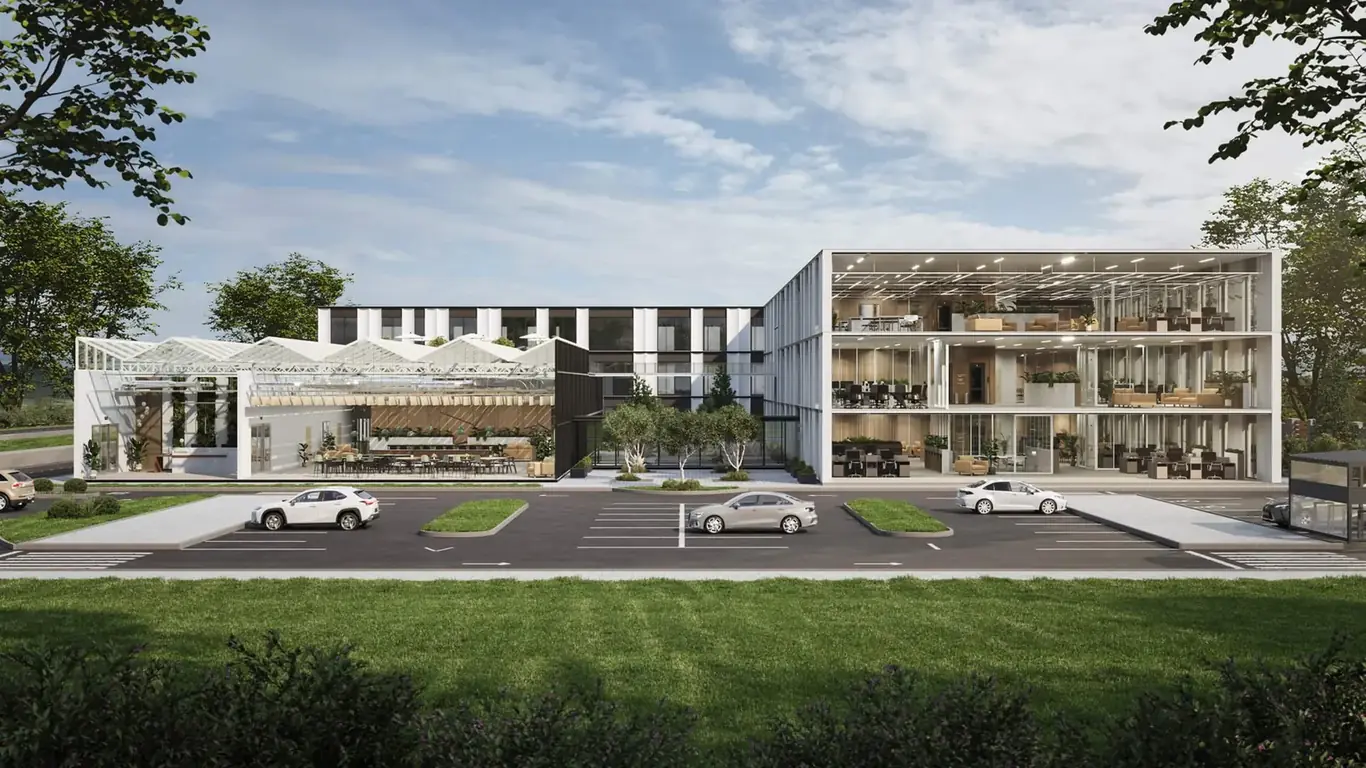
Cultural buildings — museums, libraries, performing arts centers, community cultural facilities — occupy a unique position in the architecture world. They are often the most architecturally ambitious projects in a city's development pipeline, built to last generations, and yet they are funded through a combination of public money, philanthropic capital, and community support that requires sustained communication over years or even decades. 3D rendering is the primary medium through which all of these stakeholders understand what they are being asked to support.
I've worked on visualization for cultural facilities ranging from neighborhood library branches to major civic performing arts centers. What's consistent across all of them is that the rendering serves a fundamentally different communication purpose than commercial or residential projects. The audience isn't a buyer evaluating a purchase decision — it's a community, a board of trustees, a city council, a donor, or a planning commission evaluating a civic commitment. The render has to make people feel something about the building before they've committed to supporting it.
The Capital Campaign Render: Donor Cultivation and Major Gift Fundraising
The most common use of rendering for cultural facilities is in capital campaigns. Whether it's a $20M museum expansion, a $5M community arts center, or a $150M performing arts complex, the capital campaign depends on major gift donors — individuals, foundations, and corporations who make six- and seven-figure commitments based on the vision for the facility.
Donors who are being asked for a $1M gift are making a significant commitment based largely on their emotional response to the project. A photorealistic render of the proposed building — particularly one that shows the spaces they care about, whether a named gallery, a performance hall, or a donor-recognition lobby — creates the emotional connection that a pro forma or architectural drawing cannot. I've seen fundraising teams double their major gift closure rate after replacing schematic drawings in their campaign materials with photorealistic renders.
Capital campaign renders for cultural facilities require particular attention to the experience of space. The render needs to show not just what the building looks like, but how it feels to be inside it — the scale of the atrium, the quality of natural light in the gallery, the intimacy or grandeur of the performance space. These experiential qualities are what donors respond to, and they require skillful lighting, camera placement, and furniture or figure population to communicate.
Key Views for Cultural Facility Visualization
The view set for a cultural facility varies depending on the building type, but certain views are consistently the most important:
Exterior approach view. The building's public face — how it presents to the street, plaza, or campus. For civic cultural facilities, this is the image that represents the project in the media, on campaign collateral, and in public communications. It should show the building in active use, with people arriving and occupying the public spaces around it.
Main public hall or atrium. The primary interior space — the lobby, atrium, or entrance hall — establishes the quality register of the entire building. For museums, a well-rendered atrium render showing natural light, the vertical scale of the space, and the glimpse of gallery spaces beyond is often the most powerful single image in the campaign package.
Primary program space. For a museum, a gallery render. For a performing arts center, the performance hall. For a library, the main reading room. This is the space that defines the building's purpose and should be shown at its most evocative — populated with visitors or performers, lit to convey the designed atmosphere.
Secondary program spaces. Education rooms, community meeting spaces, outdoor terraces, café or restaurant spaces — these support spaces often matter to specific donor constituencies and community stakeholders. For community cultural facilities, the community room may be more important to neighborhood council members than the gallery.
Aerial or contextual view. For buildings on prominent civic sites, an aerial rendering that shows the building in its urban or campus context communicates the project's civic significance in a way that street-level views cannot.
Planning and Public Hearing Visualization
Cultural facilities in California often face multi-year planning processes, particularly those requiring environmental impact review under CEQA, projects on public land requiring competitive design processes, or facilities in historic districts or sensitive urban environments.
Public hearing renders have different requirements than capital campaign renders. They need to show the building in accurate context — adjacent buildings at their correct scale, existing street conditions, realistic landscape rather than idealized planting. They should be presented in daylight conditions rather than the golden-hour or dusk lighting that makes marketing renders compelling but can feel misleading to planning commissioners scrutinizing the project's neighborhood impact.
For buildings adjacent to historic structures or in designated historic preservation overlay zones, photomontage renders — where the proposed building is composited into photographs of the existing conditions — are often required. These demonstrate accurately how the new facility will read in its historic context and are standard practice in California planning submissions. For a complete discussion of rendering requirements for planning applications, see our article on rendering for permit applications.
Design Competitions
Many significant cultural facilities in the US are selected through design competitions — open competitions, invited competitions, or request-for-qualifications processes. Visualization is a core component of competition entries, both for the initial qualification package and for shortlisted team presentations.
Competition renders need to communicate the conceptual vision of the design with a degree of artistry that goes beyond standard marketing rendering. The jury isn't just evaluating what the building looks like — it's evaluating the architectural idea. This means that the rendering style, composition, and atmosphere need to express the design concept, not just document it. Some of the most effective competition renders use unconventional camera angles, atmospheric lighting, or restrained color palettes that serve the conceptual narrative rather than the marketing brief.
For competitions, a hybrid approach often works well — combining photorealistic exterior renders that communicate the building's relationship to its context with more atmospheric interior renders that convey the experiential quality of the proposed spaces. The render package should tell a story, with each image building on the previous one.
Interior Lighting Challenges in Cultural Facilities
Museum and gallery spaces present specific rendering challenges related to lighting. Natural daylighting — the controlled admission of natural light to illuminate artwork without causing UV damage or glare — is a defining quality of high-performance gallery design. Rendering this quality convincingly requires accurate modeling of the daylight system (clerestory windows, light shelves, monitor roofs, rooflights) and its effect on the gallery floor and wall surfaces.
Performance hall acoustics are another challenge: the rich material palette of a well-designed concert hall — curved wood paneling, upholstered seating, layered ceiling reflectors — needs to be rendered with material accuracy that communicates both the visual richness and the acoustic logic of the design.
For all cultural facility interiors, our interior rendering service includes accurate material modeling and lighting simulation that handles the complex lighting environments these buildings require.
Post-Construction Portfolio Renders
For architects who have completed cultural facility commissions, portfolio renders of completed buildings can communicate the design quality in ways that construction photography sometimes misses — particularly for buildings in progress, buildings in climates where photography is seasonally constrained, or buildings where the best visual compositions aren't achievable with a camera position accessible to a photographer.
Renders produced from completed building drawings and site photographs can show the building at its seasonal best, with landscape mature and people inhabiting the spaces — the ideal version of the building that only occasional photography captures. For architects building their portfolio for future cultural facility commissions, these renders can be powerful portfolio assets. Full pricing is available on our pricing page.
Working on a Cultural Facility Project?
Share your drawings and program — we'll scope a visualization package for your capital campaign, planning submission, or design competition.
Request a Quote