Educational facility projects are unusual in that they have multiple very different stakeholder audiences — and each needs to see something different from the same design. The school board reviewing a bond measure needs to understand how the investment will transform the physical campus. The planning board reviewing a new building permit needs to see massing, context, and neighborhood fit. Donors contributing to a capital campaign need to feel the warmth and aspiration of the finished spaces. Students and parents considering enrollment need to see themselves in the environment.
A well-planned rendering package for a school or university project serves all these audiences with a shared visual vocabulary — the same building, rendered differently for different purposes. In my experience, the educational projects that get the most out of visualization are the ones that map the render set to the stakeholder calendar: what approvals are needed, when, and what each audience needs to see to give them.
This guide covers the key views for school and campus visualization, how to brief for different audiences, what the aerial campus view does that other views can't, and how to think about phasing renders across a long educational capital project.
The Stakeholder Landscape for Educational Projects
Educational facility projects involve more non-technical stakeholders than most building types. Understanding who needs to see what, and when, is the foundation of a useful render brief.
School boards and administrators are the primary decision-making audience for K-12 projects. They're evaluating whether the design achieves the educational goals set out in the program, whether the budget is being spent wisely, and whether the project will be defensible to parents and the community. They need clear, functional renders that show how the building will work, not just how it will look.
Planning boards and city officials evaluate massing, materials, neighborhood fit, and traffic/circulation impact. They need accurate exterior renders at specified viewpoints, often with photomontage composites showing the proposed building inserted into existing site photography.
Donors and foundations fund capital campaigns for private schools and universities. They respond to aspirational, emotionally resonant renders of the spaces their donations will create — a new library reading room, a performing arts center lobby, a science wing with views to the campus. These renders need impact and warmth first, technical accuracy second.
Prospective students and families are increasingly part of the visualization audience for universities, where campus quality is a factor in enrollment decisions. Campus website imagery, virtual tour content, and admissions materials are often sourced directly from the rendering package.
Contractors and construction managers use renders as visual references during construction — not for technical documentation (that's the drawings), but for finishes, material intent, and design spirit. A render on the site hoarding also serves as a community communication tool for neighboring properties during construction.
Key Views for Educational Facility Rendering
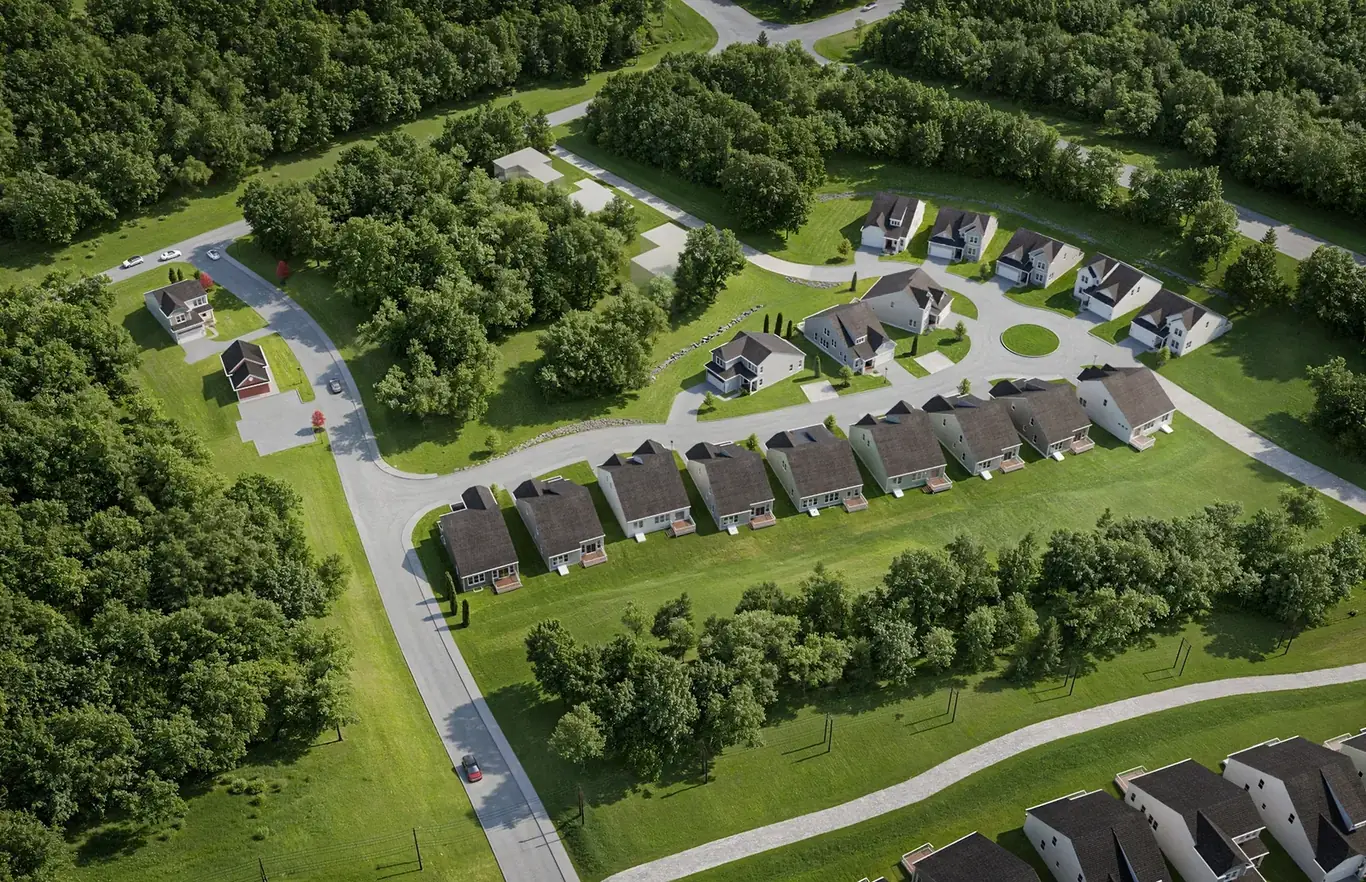
Aerial campus view: For any project involving multiple buildings or a significant site — a new K-12 campus, a university expansion, a sports and recreational campus — the aerial view is often the most important single render. It communicates the relationship between buildings, the landscape design, circulation routes, and the overall campus identity in a way that no ground-level view can. For bond measure campaigns and donor materials, this is frequently the hero image. See our guide on aerial rendering vs. drone photography for more on what this view type involves.
Main entrance and entry sequence: How a campus receives visitors, students, and staff at the primary entry point communicates institutional values clearly. A well-rendered entry sequence — from parking or transit drop-off through the campus gate and to the main building entrance — is used in both planning submissions and marketing materials.
Landmark building exterior: The signature building of the project — a new academic building, a library, a student center — deserves a dedicated exterior render that captures its architectural character. This is the image that appears in press releases, bond measure campaign materials, and the school's institutional communications for years after the project opens.
Learning space interior: A classroom, lecture hall, maker space, or library reading room rendered with natural light, quality materials, and students engaged in learning. This view is essential for donor campaigns and admissions materials. The challenge in educational interior rendering is avoiding the generic — furniture from an asset library arranged in a room that could be anywhere. The render needs to feel specific to this institution and this program.
Gathering / community space: Student commons, cafeteria, courtyard seating area, or multipurpose indoor-outdoor space. This is increasingly important for school design presentations as evidence mounts that informal learning and social environments contribute to educational outcomes. Renders showing these spaces activated — students gathering, natural light, quality landscape — communicate design philosophy as much as aesthetics.
Specialty spaces: Science labs, performing arts facilities, athletic facilities — any space that is a named priority in the capital campaign or bond measure deserves its own render. These are often the spaces donors are specifically contributing to name, and they need renders that justify the investment.
The Aerial View for Campus Master Planning
For multi-building educational campuses, the aerial view deserves special attention because it serves a purpose no other render type does: it shows how everything connects.
A university expansion involving a new science building, a renovated student center, and a new quad space isn't easily communicated in individual building renders. The aerial shows the spatial relationship between the new and existing, how the pedestrian network flows, how the landscaping unifies the campus identity, and what the campus will feel and look like when the full master plan is realized.
For bond measure campaigns — where voters are being asked to approve funding for a capital program that will take years to complete — an aerial rendering of the campus at the completion of the program is a notably persuasive assets in the campaign. It answers the fundamental question: "What will we have when this is done?"
Phasing Renders Across a Capital Project
Educational capital projects typically run 3–7 years from program definition through construction completion. The render set needs to be planned in phases that align with the project milestones and the stakeholder calendar.
Early concept phase: Aerial and exterior renders for board approval and bond measure campaign. These don't need to be fully detailed — schematic massing and material intent is sufficient — but they need to be compelling enough to secure approval and funding. These renders are often produced at 60–80% of full photorealistic quality at reduced cost, with full production reserved for later phases.
Design development phase: Interior renders for donor cultivation and campaign materials, produced as spaces are resolved to a level where finishes, furniture, and lighting are defined. This is when donor naming opportunities get visualized — the "Jones Family Science Lab" needs a render showing what the donor is naming.
Construction documents phase: Final marketing-quality renders for construction hoarding, website, admissions materials, and community communications. These should be produced from the fully coordinated construction documents, not the design development drawings, to ensure accuracy.
Pricing for Campus Rendering
| View Type | Price Range | Delivery |
|---|---|---|
| Aerial / campus overview | $1,500–$4,000 | 7–12 days |
| Building exterior (per view) | $799–$2,000 | 5–8 days |
| Interior learning space | $599–$1,400 | 5–7 days |
| Gathering / outdoor space | $699–$1,600 | 5–8 days |
| Full site master plan visualization | $3,000–$8,000+ | 2–3 weeks |
Our exterior rendering and aerial rendering services are commonly used for campus projects. For full pricing details, see our rendering pricing page.
For guidance on briefing a complex multi-stakeholder project, see our article on how to brief a rendering studio. For the comparison between aerial rendered views and drone photography of existing sites, see aerial rendering vs. drone photography.
Planning a School or Campus Project?
Share your site plan and project brief — we'll scope a visualization package with pricing within 2 hours.
Request a Free Estimate