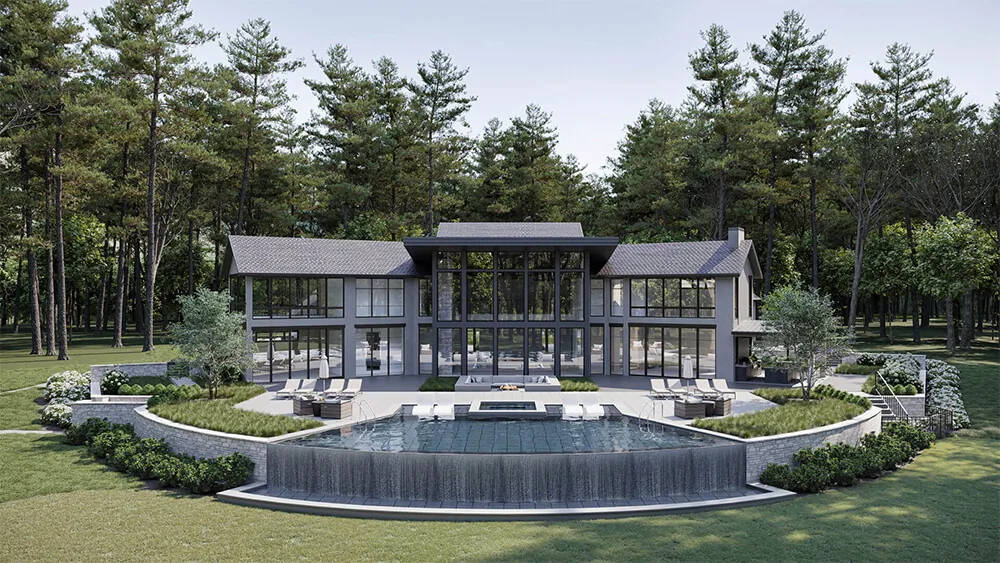
Physical scale models and 3D rendering have coexisted in architecture for decades, and they're still both in use. The question of which to commission — or whether to commission both — depends on what you're trying to communicate, to whom, and with what budget and timeline. This isn't a case where one approach is universally superior; they have genuinely different strengths, and choosing the wrong one for a given purpose wastes money.
I'll give you a direct comparison based on working experience with both. The goal is to help you make the right choice for your specific project stage and communication need — not to promote rendering over models or models over rendering.
What Physical Models Do Well
A physical model has one quality that 3D rendering cannot replicate: it exists in the real world, and people can walk around it, lean over it, point at specific parts of it, and experience it from multiple angles simultaneously without any mediation by a screen or a camera. For certain communication scenarios, this physical presence is decisive.
Design development and spatial thinking. Architects have always built physical study models to think through design problems. The act of making a physical model — even a rough cardboard or foam core massing model — forces the designer to commit to three-dimensional decisions that can be deferred indefinitely in a computer. Physical models are still widely used in design studios precisely because of this cognitive forcing function.
Large-audience public presentations. A large-scale site model of a major development project — 2 feet by 3 feet at 1:100 scale — sitting on a table at a community meeting allows dozens of people to look at it simultaneously from different angles. This spatial sharing quality is something screen-based visualization can't fully replicate, even with interactive tools.
High-profile exhibition and competition display. Physical models have a presence in exhibition contexts that renders on a screen don't match. At major architecture competitions, design exhibitions, and institutional presentations, a well-crafted physical model communicates the seriousness of the design investment in a way that is culturally legible to audiences who may not be sophisticated render viewers.
What 3D Rendering Does Better
For most practical communication purposes, 3D rendering offers advantages that physical models cannot match:
Material and finish accuracy. A physical model at 1:100 scale can't meaningfully represent the specific material palette of a building — the difference between three competing cladding options, the quality of a stone finish, the color and texture of a window frame system. A 3D render shows these with photographic accuracy. For client material approval, this is decisive: clients cannot make confident material decisions from physical models, but they can from well-executed renders.
Interior visualization. Physical models can only show interiors through transparent walls, sectional cuts, or removable roofs — all approaches that require a model to be built specifically for interior viewing and that still don't show the interior from a human-eye perspective. 3D interior rendering shows any view from any camera position, with furniture, natural light, and the full material palette. For residential clients making decisions about their future home, interior renders are far more communicative than any physical model approach.
Versatility and replication. A 3D render can be distributed digitally to unlimited recipients — investor decks, planning authority submissions, leasing websites, social media — without any cost beyond the initial production. A physical model sits in one place and can't be replicated without significant additional cost.
Revisions and updates. When the design changes, a 3D model can be updated and new renders produced. A physical model needs to be rebuilt — at significant cost if the changes are substantial. For projects going through multiple design iterations during planning approvals, rendering is dramatically more cost-effective for tracking design changes.
Cost and Timeline Comparison
| Factor | 3D Rendering | Physical Scale Model |
|---|---|---|
| Typical cost (residential) | $500–$2,000 per view | $2,000–$10,000+ per model |
| Typical cost (large commercial) | $3,000–$15,000 (full package) | $15,000–$100,000+ |
| Production timeline | 7–21 days | 4–12 weeks |
| Revision cost | Low — model update + re-render | High — rebuild required |
| Distribution | Unlimited digital copies | Single physical object |
| Interior visualization | Full interior access | Limited / sectional only |
| Material accuracy | Photographic accuracy | Representation only at scale |
When to Use Both
Some project types genuinely benefit from both physical models and 3D rendering. Major civic and cultural projects — performing arts centers, museums, civic centers — often commission a presentation physical model for exhibition and board presentations while using photorealistic renders for all marketing, planning submission, and digital communication purposes. For the full brief requirements specific to these building types, see our guide on cultural center and museum rendering, which covers the visualization needs for public institutions from community engagement through capital campaign materials. The model serves the physical presence function; the renders serve everything else.
For major mixed-use developments, a large-scale site model for the sales center lobby combined with a full render package for the marketing suite is a common approach. The model gives visiting investors and buyers a tangible sense of the project's scale and site relationship; the renders show them the specific units and amenities they're evaluating.
The key is to commission each tool for what it does well rather than attempting to use one to substitute for the other. A physical model that tries to show material quality at 1:200 scale, or a render that tries to substitute for the physical presence of a model at a community meeting, both underperform.
The Practical Default
For most architectural projects in 2026, 3D rendering is the default visualization tool because it's faster, less expensive, more versatile, and better at communicating the qualities clients and investors respond to — material quality, interior spatial experience, and the building's relationship to its context. See our exterior rendering services and project portfolio to get a sense of the range. Physical models remain valuable for specific use cases: design development, high-profile exhibition, and presentations where physical presence is strategically important.
If you're deciding between the two, start with what you're trying to accomplish: if it's client approval of materials and finishes, marketing to remote investors, or digital distribution to many recipients, renders are the right tool. If it's a large-audience community presentation, a major exhibition, or a design competition where physical presence signals seriousness, a physical model may justify its cost.
Full rendering pricing is on our pricing page. For guidance on choosing the right rendering approach for your project, see our article on architectural rendering styles.
Not Sure Which Approach is Right?
Describe your project and communication need — we'll recommend the right visualization strategy with pricing within 2 hours.
Get a Recommendation