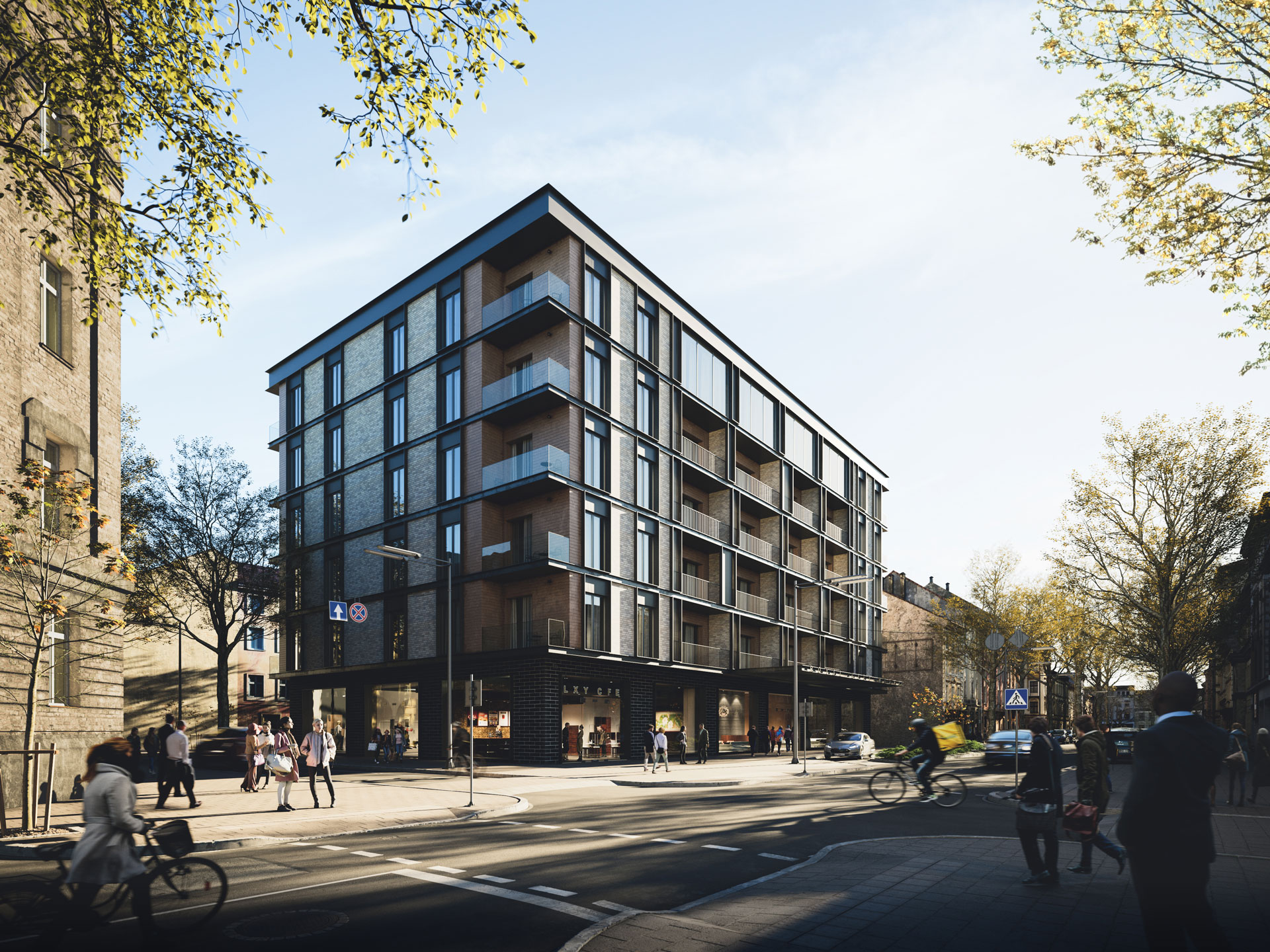
Architectural visualization on a typical mid-size residential development represents 0.05–0.15% of total project cost. The pre-sales acceleration, price premiums, and carrying cost savings it supports represent returns measured in multiples of that figure. Developers who have done this math — really done it, not just referenced it loosely — treat visualization as one of the highest-ROI line items in their pre-development budget.
I've worked with developers at every scale, from infill residential to large mixed-use. The numbers I'll cite in this article come from published case studies and industry research — not from overstated marketing claims. For the underlying academic and industry data, I'd point you to our research piece on 3D rendering and pre-construction revenue, which cites peer-reviewed sources in detail.
The key metrics: what the data actually shows
Before the framework, here's a consolidated view of the performance data currently in the literature. These are the numbers competitors cite, attributed to their sources:
| Metric | Finding | Source / Context |
|---|---|---|
| Pre-sale rate with visualization | 40–50% before groundbreaking | vs. 15–20% without comprehensive visualization |
| Days on market | 20–44% reduction | Case studies from US and Asian markets |
| Price premium | 3–9% higher per unit | Compared to 2D drawings-only marketing |
| Listing views | 37–87% more views | Zillow (37%); industry aggregates (87%) |
| Qualified lead generation | 49% more qualified leads | Matterport platform data |
| Time on site (virtual tours) | 4–6x longer engagement | vs. static images, multiple sources |
| Design error reduction | 30–40% fewer change orders | Construction industry research |
| Visualization cost vs. project value | 0.03–0.15% | Across project scales $2M–$100M+ |
Two notes on these numbers. First, treat ranges critically — the wide bands reflect different market conditions, project types, and visualization quality levels. Second, the most conservative figures still produce a compelling ROI case when you run them against actual project economics. That's the exercise I'll walk through next.
The 5 ROI mechanisms — and how to size each one
Visualization ROI comes from five distinct mechanisms. Not all apply to every project, but most projects capture at least three.
1. Pre-sales acceleration and carrying cost reduction
For residential developers, this is almost always the largest single return. Pre-sales serve two functions: they generate early revenue, and they satisfy lender pre-sale thresholds that govern construction loan disbursements. Projects launching with comprehensive visualization routinely achieve 40–50% pre-sold before groundbreaking; those without rarely exceed 15–20%.
The carrying cost framing makes the math concrete. If your construction loan draws at $1.5M per month and better visualization allows you to hit your lender's 30% pre-sale threshold 60 days earlier, you save $3M in financing costs. The visualization package costs $15,000–$30,000. That's a 100x return on the specific carry reduction alone — and it doesn't yet include the price premium or faster closeout.
For a real-world benchmark: a Sacramento developer pre-sold 100 ADU units before breaking ground using a rendering package covering exterior hero shots, interior vignettes, and 3D floor plans. The entire visualization investment was recovered through pre-sales deposits within 60 days of launching the campaign.
2. Price premium
Properties marketed with professional 3D visualization consistently achieve 3–9% higher per-unit pricing compared to equivalent properties marketed with 2D drawings and floor plans alone. On a $500,000 unit, a 5% premium is $25,000. On a 40-unit project, that's $1,000,000 in additional revenue against a visualization investment of $20,000–$40,000.
The mechanism is buyer confidence. When a buyer can see exactly what they're buying — the finishes, the light quality, the spatial experience of a kitchen that doesn't exist yet — they're bidding on certainty, not imagination. Certainty commands a higher price. The property in Denny-Blaine, Seattle, cited by Property Visualizer achieved a $300,000 price increase (8%) attributed directly to photorealistic renders and 3D tours on a new construction project.
3. Days-on-market reduction
Reducing days on market has two direct financial effects: it compresses the period during which you're carrying the asset, and it reduces the probability of a price reduction as market conditions shift. The same Seattle project sold in 3 weeks — 20% faster than the comparable baseline. A Chinese market analysis of VR visualization found a reduction in sales time from 34 to 19 days (44%) in comparable developments.
At typical US construction financing rates, every week of compressed sales cycle on a $5M project saves $5,000–$7,000 in interest. Three weeks of acceleration is $15,000–$21,000 in pure carry savings — before any price premium or volume benefit.
4. Change order avoidance
This is the ROI mechanism most developers undercount because it shows up on the construction budget, not the marketing budget. Construction change orders cost 10–15% more than the original scope for the affected work, plus delay time. Many originate from design decisions that weren't adequately visualized: a material combination that reads poorly at full scale, a layout ambiguity that becomes obvious at framing but was undetectable in plan view.
Renders force design resolution before construction starts. When a client approves a rendered kitchen, they're approving specific cabinet heights, countertop materials, appliance placement, and lighting — in writing, with visual reference. Industry research consistently shows 30–40% fewer design-related change orders on projects with full visualization. On a $6M commercial fit-out, that's $180,000–$240,000 in avoided overruns.
5. Planning approval and investor confidence
Entitlement delays rank among the most expensive risks in development. A 90-day planning delay on a project with $1.2M per month in carrying costs is a $3.6M hit. High-quality visualization — accurate photomontages, contextual aerials, street-level perspectives — reduces planning friction by communicating clearly to planning staff and commissioners in a way that technical drawings don't. This reduces requests for supplemental information, which is the primary driver of review timeline extension.
Investor confidence is harder to quantify but consistently observed: equity rounds close faster and at better terms when the visualization package lets investors without architectural backgrounds actually understand what they're funding. For any project where a 60-day acceleration in equity closing matters to construction start timing, this is real financial value.
A simple ROI framework for your project
Here's how to run the numbers for a specific development. Use conservative estimates — the case doesn't need inflated assumptions to be compelling.
Start with your monthly carrying cost: construction loan interest + holding costs (taxes, insurance, overhead). For a $15M project at 7% annual financing, that's roughly $87,500/month.
Then estimate the value of pre-sales acceleration in weeks. If visualization gets you to your lender's 30% threshold 6 weeks earlier than floor-plan-only marketing would, multiply 6/4 months × $87,500 = $131,000 in carry savings.
Add the price premium: 40 units × $500,000 average × 4% premium = $800,000 in additional revenue. Use 4% as a conservative assumption — it's at the low end of the documented range.
Add estimated change order avoidance — conservatively 1–2 avoided change orders at $20,000–$40,000 each: $20,000–$80,000.
Total estimated value: $951,000–$1,011,000 against a visualization investment of $25,000–$40,000. That's a 25–40x return — and this uses conservative inputs at every step.
The numbers are sensitive to project scale and market, but the ratio is remarkably stable. A $2M infill project generates smaller absolute returns but similar multiples because the visualization investment scales down with the project.
ROI by project type
Residential multifamily and condo pre-sales generate the highest ROI because all five mechanisms apply and the pre-sales velocity effect is most pronounced. Developments with 20+ units benefit from the multiplier effect: the visualization investment is roughly fixed regardless of unit count, but the per-unit price premium and carry savings scale linearly with unit count. See our guides on apartment complex rendering and condo pre-sales visualization.
Commercial office and retail capture ROI primarily through tenant pre-leasing, investor presentations, and planning approvals rather than consumer pre-sales. The price premium mechanism operates differently — it shows up as higher per-square-foot lease rates and faster lease-up — but the carry cost reduction math applies equally. A 60-day faster lease-up on a 50,000 SF office building at $35/SF NNN saves $291,000 in foregone rent, against visualization that typically costs $15,000–$30,000.
Hospitality and mixed-use generate ROI through investor decks, brand approvals, and construction financing, where the visualization quality directly affects capital terms. These projects also tend to commission larger visualization packages (animation, 360° tours, VR experiences), which shifts the cost basis upward but keeps the multiples intact because the capital being accessed is correspondingly larger.
Single-family and small residential (under 6 units) have the smallest absolute returns but often the clearest ROI per dollar: a $2,500 rendering package on a $2.5M spec home that sells 3 weeks faster saves $15,000–$20,000 in carry and achieves a 1–2% price premium worth $25,000–$50,000. The investment pays back at 15–25x even at this scale.
The show home comparison
Before visualization became standard practice, developers built physical show homes or show suites to support pre-sales — fully furnished, fully fitted-out sample units. A show suite for a luxury condo development costs $300,000–$600,000 to build and furnish, takes 3–4 months to complete, and covers one unit type. After the sales campaign, it's demolished or re-sold at a discount.
A full visualization package covering 4–6 unit types, all amenities, exterior hero views, aerial, and 3D floor plans costs $20,000–$40,000, takes 3–4 weeks, and is available across every digital channel from day one. It updates when design details change without any physical rework.
For most developers, this comparison ends the debate. The switch from show home to visualization-led pre-sales is not a quality tradeoff — modern photorealistic rendering achieves comparable or superior buyer engagement at 1/10th the cost. See our research article on pre-construction revenue and 3D visualization for the academic evidence on buyer response to virtual versus physical viewing experiences.
When rendering delivers weak ROI
Visualization doesn't deliver full value in every scenario. Here are the cases where the math breaks down:
- The project is already sold or committed. Renders produced after all units are under contract add no pre-sales value. They may have secondary value for brand-building or design refinement, but the primary ROI driver is gone.
- The market is severely supply-constrained. When demand exceeds supply by a wide margin and anything sells regardless of presentation, the marginal effect of visualization on velocity and pricing compresses.
- Renders are commissioned too late. The ROI compresses dramatically when visualization arrives after the critical decision windows — planning submission, lender pre-sale threshold, equity close. Timing is everything.
- The quality doesn't match the audience. A mediocre render at a luxury price point actively undermines the project's positioning. In competitive markets, poor visualization is worse than no visualization because it signals poor execution quality. The ROI of underinvesting in quality is negative.
On that last point: the most important quality decision is the hero renders — the primary exterior, the signature amenity, the flagship unit. These get the most exposure in marketing materials and investor presentations. Secondary views and floor plan content can be at a more standard tier. Concentrate quality investment where it creates the most impressions.
How to maximize your visualization ROI
The ROI framework above shows where value comes from. Here's how to capture as much of it as possible:
- Commission early. The carry cost reduction and pre-sales acceleration ROI requires renders to be available at launch — not three weeks after it. Build visualization production into the pre-development timeline, not the marketing timeline.
- Brief comprehensively. The most common reason visualization underperforms is an incomplete brief that leads to modeling assumptions, which lead to revision rounds, which delay delivery. A complete brief with drawings, materials specifications, and atmosphere references produces the right output on the first draft. Our guide to briefing a rendering studio covers this in detail.
- Match scope to decision windows. Commission planning-stage visualization (accurate photomontage, contextual exteriors) before your planning submission. Commission marketing-stage visualization (unit types, amenities, lifestyle renders) before your sales launch. Don't commission everything at once if the project timeline has clear phases.
- Invest in digital delivery. Static renders get more distribution — website, listing platforms, investor decks, broker packs — when they're paired with an interactive floor plan and a 360° tour. The marginal cost of adding these to an existing render package is low relative to the engagement uplift they generate.
- Evaluate quality before price. Check the studio's portfolio against projects at comparable quality levels before comparing rates. A $5,000 savings on visualization that produces renders requiring four revision rounds and still falls short of the quality needed for your marketing materials is not a saving.
See our visualization services and current pricing to understand how we structure packages for projects at different scales and stages.
Want to run the ROI numbers on your project?
Share your project brief and we'll scope a visualization package with pricing within 2 hours — and walk through the ROI case for your specific deal.
Request a Free Estimate