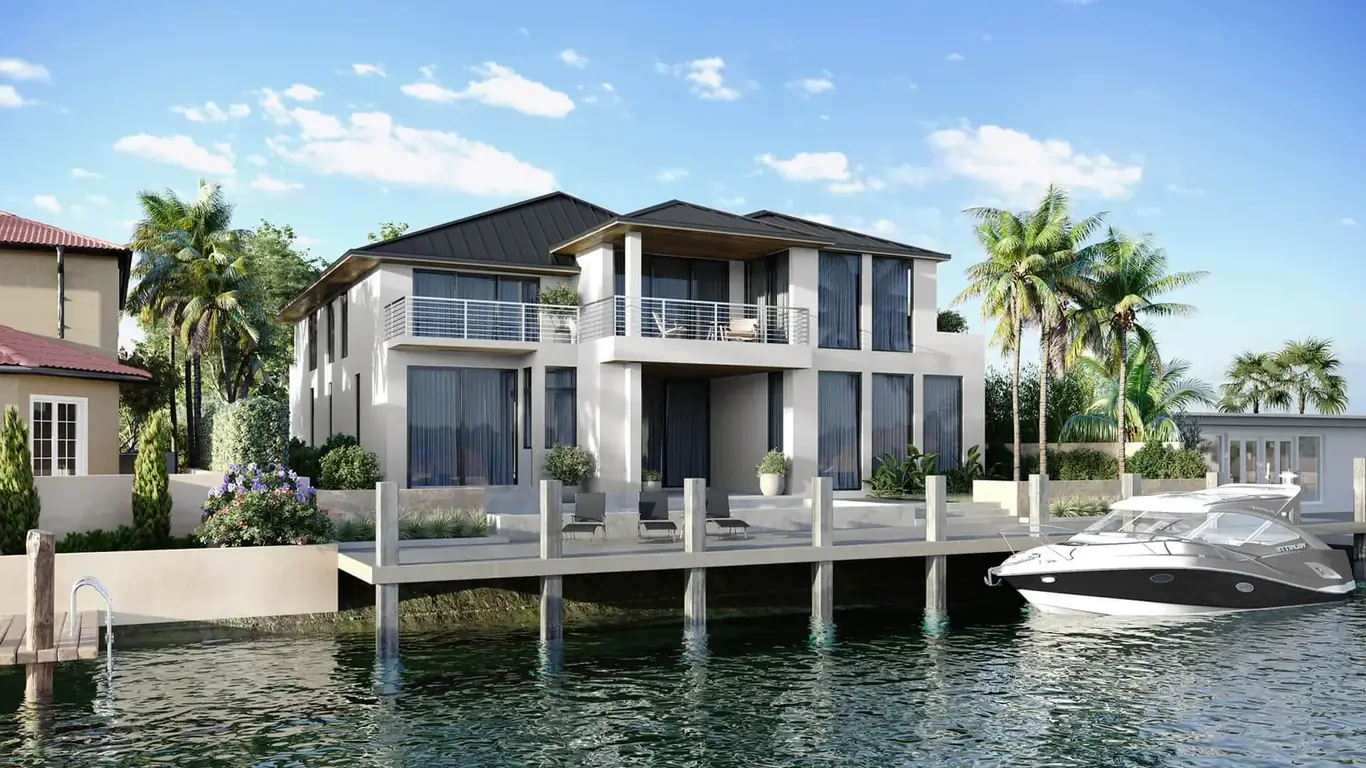
Los Angeles has a notably active architectural visualization markets in the United States, driven by a combination of high land values, intense development pressure, a large community of design-focused architects and developers, and a regulatory environment that increasingly requires visual documentation as part of the approval process. Projects ranging from ADUs in the San Fernando Valley to luxury hillside custom homes in Bel Air to mixed-use transit-oriented developments in Koreatown all use 3D rendering at various stages of their lifecycle — for design development, community engagement, planning submissions, pre-sales, and marketing.
What makes the Los Angeles rendering market distinct is the specificity of its regulatory context. LADBS permitting requirements, CEQA environmental review for larger projects, HPOZ design review for historic preservation districts, and coastal commission requirements for projects near the Pacific all create specific documentation and visualization requirements that a rendering studio serving the LA market needs to understand. Working with a studio that knows these requirements — rather than one learning them on your project — saves time and prevents submissions that need to be revised and resubmitted.
This guide covers what shapes 3D rendering demand in Los Angeles, the project types where visualization is most commonly used, the California-specific planning requirements that drive render specifications, and what to look for when choosing a rendering studio for an LA project.
What Drives LA's Demand for 3D Rendering
Three structural factors make Los Angeles a notably rendering-intensive real estate markets in the country.
Development density and land value. Infill development in LA is economically intense because land is expensive and zoned sites are scarce. Developers building at $400–600/sf total construction cost need to communicate project quality clearly to lenders and investors before a shovel goes in the ground. Renders are part of every serious capital raise and pre-sales effort for multifamily, mixed-use, and commercial projects in the LA market.
Design culture. Los Angeles has an exceptionally strong architectural culture — more per-capita architectural firms, more design-forward clients, and more tolerance for ambitious residential architecture than most American cities. This drives demand for high-quality interior and exterior rendering from private residential clients as well as commercial developers. Custom home projects, major renovations, and ADU additions routinely involve professional visualization as part of the design development process.
Regulatory requirements. California has some of the most thorough planning and environmental review requirements in the US. CEQA environmental review for mid-size and larger projects requires visual impact analysis — and photomontage composites for projects in visually sensitive locations. Coastal Commission applications require visual documentation of project appearance and neighborhood compatibility. HPOZ design review requires evidence that new construction is compatible with historic character. Each of these regulatory processes generates rendering demand that doesn't exist in markets with lighter planning requirements.
ADU Rendering in Los Angeles
The ADU boom in California has been the single largest growth driver for residential visualization in the LA market over the last five years. State legislation — AB 68, AB 881, SB 9, and subsequent amendments — dramatically streamlined ADU permitting, reduced setback requirements, and eliminated many previous barriers to construction. The result has been a surge in ADU projects throughout Los Angeles County, with tens of thousands of permits issued annually. For a broader picture of how these legislative changes are reshaping the LA development landscape, see our analysis of Los Angeles development trends 2026.
ADU rendering serves several distinct purposes in the LA market. For permit submissions, a 3D render provides LADBS plan reviewers and, where applicable, HPOZ design review committees with a clear image of what the proposed unit will look like in context — particularly useful for garage conversions and attached ADUs where the visual relationship to the main dwelling needs to be demonstrated. For homeowners deciding on design options — detached unit vs. garage conversion vs. above-garage addition — renders of each option allow a side-by-side comparison before committing to a design direction.
HPOZ restrictions apply to many LA neighborhoods including Hancock Park, Carthay Circle, Beverly Grove, South Carthay, and portions of Hollywood and Silver Lake. New construction and substantial alterations in these zones require Design Review Board approval. Renders that clearly show the proposed work's relationship to the existing dwelling and neighboring structures help demonstrate design compatibility — the key test that HPOZ review applies. For a full overview of ADU visualization, see our article on ADU rendering in Los Angeles.
Hillside and Luxury Residential Projects
Los Angeles hillside residential development — in the Hollywood Hills, Bel Air, Pacific Palisades, Malibu, and Palos Verdes — is among the most design-intensive residential construction in the United States. These projects involve complex site grading, cantilever structures, infinity pools, and landscape integration that makes visualization an essential part of the design development and client communication process.
Hillside renders require attention to terrain context: the building needs to read correctly within its slope rather than sitting on a flat pad. View-oriented camera positions — looking out from the main living level over the canyon, valley, or ocean — are often the most commercially important renders for luxury projects because the view is the primary amenity that drives property value. Interior renders showing the indoor-outdoor connection, the kitchen looking toward the view terrace, and the master suite with morning light from the correct orientation are the images that matter most to luxury buyers.
California hillside projects also often require geological and fire safety assessments, and renders may need to show defensible space requirements, fire-rated material specifications, and the building's relationship to setback lines on steep terrain. These technical requirements are part of the brief for hillside visualization in the LA market.
Multifamily and Mixed-Use Development in LA
Los Angeles has been a notably active multifamily development markets in the US over the past decade, with extensive construction of infill apartment buildings along the Metro transit corridors — Vermont Avenue, Wilshire Boulevard, Western Avenue, Crenshaw, and the Expo Line. Transit-oriented development (TOD) projects receiving density bonuses under California's TOD exemptions typically go through entitlement processes that benefit significantly from professional visualization.
For projects subject to CEQA review — generally those with 50+ units or in sensitive locations — visual impact analysis is required as part of the environmental documentation. This typically involves photomontage views from planning-designated viewpoints showing the proposed development composited into actual photography of the existing street. The Department of City Planning specifies the required viewpoints in the scoping letter, and renders must meet documentary accuracy standards that differ from pure marketing imagery.
Design Review approval is required for projects in specific overlay zones, historic districts, and neighborhoods with community plan implementation overlays (CPIOs). Each of these review processes has specific documentation requirements — typically exterior elevations plus rendered views — that need to be scoped into the visualization package from the start.
What to Look for in an LA Rendering Studio
Not all rendering studios are equally suited to the LA market. When evaluating studios for an LA project, I look for several specific competencies:
California regulatory knowledge. Does the studio know what CEQA photomontage requires? Have they produced documentation for HPOZ submissions? Do they understand the difference between a design review render and a marketing render in terms of accuracy requirements? Studios that work primarily outside California often learn these requirements on the client's project — at the client's cost.
LA context accuracy. Los Angeles has specific light quality, vegetation, and urban character that should be visible in renders of LA projects. The flat, bright Southern California light is different from the warmer light of the Southwest or the cooler light of the Pacific Northwest. Palm trees, California oaks, drought-tolerant landscaping, and stucco exteriors are context elements that an LA-experienced studio handles correctly rather than substituting generic temperate-climate stand-ins.
Residential design fluency. The design vocabulary of LA residential architecture — from Case Study house modernism to Mediterranean revival to contemporary hillside construction — requires visual fluency that not all rendering studios have. Renders of LA residential projects should feel native to the city's architectural tradition, not like generic international contemporary buildings placed on a California site.
Our studio works exclusively on US projects and has produced visualization for the full range of LA project types — single-family residential, ADU, multifamily, mixed-use, commercial, and hospitality. The Southern California market extends well beyond city limits; for clients working across the region, our Orange County 3D rendering services cover projects throughout Orange County with the same California regulatory knowledge. For a full view of our service offering and LA-market pricing, see our exterior rendering and interior rendering service pages, or visit our pricing page for rates.
California-Specific Considerations for Rendering Briefs
When briefing a rendering project in the LA market, several California-specific factors need to be addressed upfront:
- Sun angle and orientation. Specify the project address so the studio can set accurate sun position for the time of day and season you want shown. LA's Mediterranean climate and high sun angle produce distinctive shadows and light quality that needs to be modeled correctly for planning documentation.
- Drought-tolerant landscaping. California building codes and local ordinances increasingly require drought-tolerant landscaping. If the project's landscape design uses native or drought-adapted plants, brief the studio specifically — generic lush green landscapes can misrepresent the design intent and create issues at plan review.
- Fire-hardened materials. Hillside projects in Very High Fire Hazard Severity Zones (VHFHSZ) require ignition-resistant construction. If exterior materials are specified for fire resistance — non-combustible decking, Class A roofing, fire-rated vents — these should be accurately represented in renders that will be used for permit documentation.
- Solar and sustainability features. California's Title 24 energy requirements and CALGreen code influence building design. If the project includes rooftop solar, high-performance glazing, or sustainable material specifications, these are worth including in the render brief as they demonstrate code compliance and can be a selling point for both residential and commercial projects.
For a full overview of what to prepare before briefing a rendering studio, see our guide on how to brief a 3D rendering studio. For a comparison of what rendering looks like across project stages and how to set expectations, see what to expect from a rendering studio.
Working on a Los Angeles Project?
We specialize in LA-market visualization — ADUs, hillside residential, multifamily, mixed-use, and commercial. Send us your drawings for a scoped estimate within 2 hours.
Request a Free Estimate